
How Much House Can I Afford in Portland on a $150K Household Income?
Let's be honest for a second. You've done the math on a napkin, maybe run a number or two through a mortgage calculator at 11pm while your kid was finally asleep, and you still walked away more confused than when you started. You're earning good money — real money — and yet somehow homeownership in Portland still feels like it's sitting just slightly out of reach. That tension? It's not in your head. And you're not bad with money. The reality is that the math on buying a home in 2026 is genuinely complicated, and nobody is giving you a straight answer.
Maybe you're a dual-income household, both of you with graduate degrees and student loans that never seem to shrink. Maybe you've been renting a great place in Hawthorne or Division for years, watching home prices with a mix of longing and low-key dread. Maybe you're relocating from the Bay Area or Seattle and you've heard Portland is more affordable — and honestly, compared to those markets, it still is. But "more affordable" is relative, and if you're walking in expecting Portland prices to feel gentle, the close-in neighborhoods will give you a reality check fast. The good news? A $150,000 household income genuinely opens doors here — you just need to know which doors, which neighborhoods, and which trade-offs are worth making.
Portland Neighborhood Affordability: What $150K Actually Gets You
Portland's median home price sits around $524,000, with inventory hovering at a tight 3.1 months — technically still a seller's market, though more balanced than the frenzied years of 2020–2022. That median is a useful anchor, but Portland is a city of distinct neighborhoods, and the spread in price-per-square-foot between a bungalow in Sellwood and a ranch home in Gresham can be $150,000 or more.
Here's a practical breakdown of how your buying power maps across the metro area.
Close-In Eastside: Character, Commute, and Competition
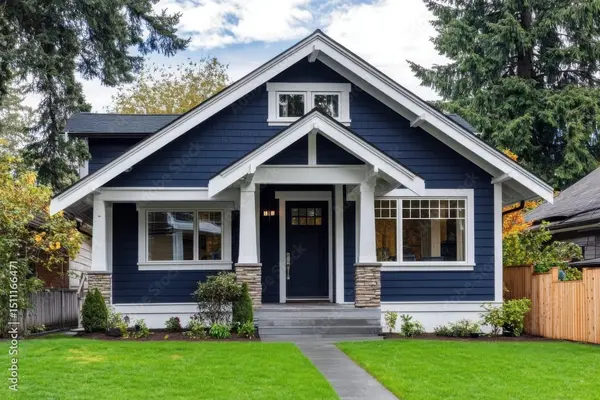
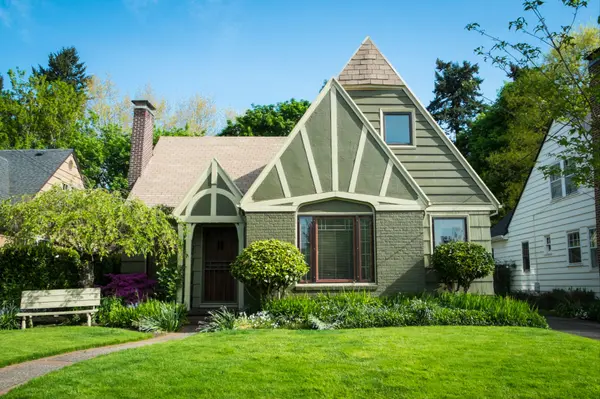
Neighborhoods like Sellwood-Moreland, Alberta Arts District, Hawthorne, and Division are what most people picture when they dream about Portland. Victorian bungalows, walkable coffee shops, Saturday farmers markets. They're also the neighborhoods that will stretch your budget the most.
- Typical price range: $525,000–$700,000+ for a move-in-ready 3-bedroom
- What $150K income qualifies you for: Roughly $480,000–$530,000 (depending on debt load and down payment)
- Reality check: You can find entry points in these neighborhoods, but you'll likely be competing for homes that need work, or accepting a smaller square footage than you'd prefer
- The upside: Long-term appreciation in these corridors has historically outpaced outer suburbs, and lifestyle quality is high
If close-in Eastside is your target, you'll want to enter this market with a sharp pre-approval, a flexible definition of "move-in ready," and a clear-eyed understanding of your renovation budget.
Outer Eastside and Inner Suburbs: Where Your Budget Breathes
Move out to Hillsdale, Beaverton, Gresham, Lents, Centennial, or Parkrose, and your $150,000 income starts to feel genuinely comfortable. These aren't consolation prizes — many of these communities have excellent schools, easy MAX access, and the kind of quiet, established neighborhoods that age well.
- Typical price range: $380,000–$499,000 for a solid 3-bedroom
- What $150K income gets you here: A home at or below the metro median, with room to breathe on monthly cash flow
- Beaverton specifically has become a magnet for tech workers and young families, with strong resale fundamentals and proximity to Nike and Intel campuses
- Gresham offers the most aggressive value in the metro — buyers willing to do light cosmetic work can find genuine equity upside
If you're newer to Portland, don't let geography bias you before you've done a Sunday afternoon drive through these areas. The neighborhood you thought was "too far out" has a way of feeling different once you've found the right street.
The Honest Conversation About Debt, Down Payments, and Interest Rates
Income is only one piece of the affordability equation. In our experience working with buyers in the Portland metro, the three variables that most often reshape what's possible are student loan balances, down payment size, and today's interest rate environment. Let's address each directly.
Student Debt
If you're carrying student loans — and statistically, many of our clients are — lenders will factor your monthly payment into your debt-to-income ratio (DTI). Even income-driven repayment plans get counted. A $600/month student loan payment effectively reduces your home-buying power by approximately $80,000–$100,000 at today's rates. That's not a reason to delay buying, but it is a reason to model your numbers carefully before you fall in love with a home.
Down Payment Realities
The myth that you need 20% down dies hard, but it's still a myth. FHA loans allow 3.5% down with a credit score of 580+, and many conventional loan programs go as low as 3–5%. On a $480,000 home, a 5% down payment is $24,000 — meaningful, but achievable for households that have been intentionally saving. Oregon also offers down payment assistance through Oregon Housing and Community Services (OHCS), which can be layered with certain loan products for qualified buyers.
The trade-off with lower down payments is private mortgage insurance (PMI), typically 0.5–1.5% of the loan amount annually. On a $456,000 loan, that's roughly $190–$570 per month added to your payment — a real number that belongs in your budget model.
Interest Rate Reality at ~6.5%
At approximately 6.5% on a 30-year fixed mortgage, a $450,000 loan carries a principal and interest payment of around $2,844/month. Add property taxes (Multnomah County averages roughly 1.07% of assessed value annually), homeowners insurance, and PMI if applicable, and total monthly housing costs on a median-priced Portland home can approach $3,800–$4,200 per month.
On a $150,000 gross household income, that's approximately 30–34% of gross monthly income — which sits right at or just above the traditional 28% front-end guideline, but within the range most lenders will approve. It's workable. It requires intention. And it's exactly the kind of scenario where having a thoughtful advisor in your corner makes a material difference.
The KD Real Estate Difference: Spreadsheets and Empathy in Equal Measure
Here's what we believe at KD Real Estate: buying a home is both a financial transaction and a deeply human one. Every house has a story — the family that raised children in it, the years of Sunday mornings in that breakfast nook, the garden someone tended for decades. We take the time to listen to the story of the house, and we help you understand what you're really buying beyond the square footage and the list price.
At the same time, we bring a rigorous analytical lens to every transaction. With an MBA background and years of Portland market experience, we build real models — not back-of-envelope guesses. We'll walk you through your true buying power, your risk exposure, your estimated carrying costs, and your equity trajectory. We'll tell you when a neighborhood is likely to appreciate and when a price point looks soft. We'll tell you the truth even when it's not what you hoped to hear.
Because at the end of the day, the best real estate advice is the kind that serves your life, not just the transaction. That's the KD standard, and it's what every client who works with us can expect.
FAQ: Buying a Home in Portland on $150K
Is $150K a good income in Portland, OR?
Yes — $150,000 is a strong household income in Portland. The Portland metro median household income is approximately $82,000, meaning a $150K household earns nearly double the median. It qualifies you for homes in the $450,000–$530,000 range depending on your debt profile, down payment, and credit score, which covers a significant portion of the Portland market including outer eastside neighborhoods and many inner suburbs.
Can I buy a house in Portland, OR with 5% down?
Yes. Conventional loan programs from many lenders allow as little as 3–5% down for qualified buyers. On a $480,000 home, 5% down is $24,000. You will likely pay PMI until you reach 20% equity, but this is a manageable and common path to homeownership. Oregon Housing and Community Services also offers down payment assistance programs that may reduce your upfront cash requirement further.
What are property taxes in Multnomah County?
Multnomah County property taxes average approximately 1.07% of assessed value annually, though your actual tax bill depends on your home's assessed value (which is often below market value in Oregon due to Measure 5 and Measure 50 limitations) and any applicable local levies. On a $500,000 home with a lower assessed value, annual property taxes commonly range from $4,500–$7,000. You can look up specific property tax records through the Multnomah County Assessment and Taxation office.
How much house can I afford in Portland on a $150K income?
Using the standard 28% front-end DTI guideline, a $150,000 gross income supports approximately $3,500/month in total housing costs (PITI). At a 6.5% interest rate with 10% down, that translates to a purchase price in the range of $480,000–$530,000, assuming moderate debt. Your personal numbers — student loans, car payments, credit cards — will refine this range significantly. A pre-approval conversation with a trusted lender is the most accurate starting point.
Is now a good time to buy a home in Portland?
With inventory at 3.1 months and prices stabilized near the $524,000 median, Portland is no longer the overheated market of 2021. Buyers have more negotiating room, more time to do due diligence, and more realistic sellers than they did three years ago. Whether it's the "right time" depends entirely on your financial readiness, your life timeline, and the specific neighborhoods you're targeting. The best time to buy is when you're financially prepared and personally ready — not when the headlines say so.
Sources
- Redfin: Portland, OR Housing Market Trends
- Zillow: Portland Home Values
- Multnomah County Assessment and Taxation
- Oregon Housing and Community Services (OHCS) — Homeownership Programs
- Consumer Financial Protection Bureau: Owning a Home Resource Center
Explore More from KD Real Estate
- Portland Neighborhood Guide: Where to Buy Based on Your Lifestyle
- First-Time Homebuyer's Roadmap for the Portland Metro
- Portland Real Estate Market Update: What Buyers Need to Know Right Now
- Down Payment Assistance Programs in Oregon: A Complete Guide
- Talk to Kerrie: Schedule a No-Pressure Buyer Consultation
Suggested Internal Links
Categories
Recent Posts