
What Portland Gets Wrong: An Honest Guide for Families Relocating in 2026
I want to start with something most real estate blogs would never say: Portland is not for everyone. And that is perfectly okay. After years of helping families relocate into and out of this city, I have learned that the families who thrive here are not the ones who arrived with the shiniest optimism. They are the ones who arrived with clear eyes, real data, and a genuine alignment between what Portland offers and what their family actually needs. This guide is for those families.
I am Kerrie, founder of KD Real Estate, and I have spent years studying this market not just as a practitioner but as someone with an MBA and a deep interest in behavioral psychology as it applies to major life decisions. Buying a home is not a transaction. It is a values statement. It is a declaration about how you want to raise your children, what kind of community you want to be embedded in, and how you want to spend your finite time and money. So let us talk about Portland honestly, completely, and with the depth this decision deserves.
The Market Reality in 2026: What the Numbers Actually Mean for Your Family
Portland's housing market in 2026 is what I call a measured-tension market. It is not the frenzied bidding-war environment of 2021, but it is also not a buyer's paradise. Let me walk you through the numbers and then tell you what they mean in plain language.
The median sale price sits between $560,000 and $562,000, which is actually quite reasonable for a major Pacific Northwest metro with the lifestyle infrastructure Portland offers. But here is what most people miss: the average sale price is $637,300. That gap between median and average is meaningful. It tells you that the upper end of Portland's market is robust. Luxury and high-quality single-family homes in premium neighborhoods are selling well above the midpoint, which signals that the people with strong financial footing are committing to this city. That is a confidence indicator worth noting.
We are sitting at 3.2 months of supply, which technically still favors sellers — a balanced market is generally considered six months. But the average market time of 57 days tells a more nuanced story. Homes are not flying off the shelf in 48 hours like they were a few years ago. Families have time to be thoughtful. They can do a proper inspection, negotiate, and make decisions without adrenaline hijacking their judgment. As someone who has watched clients make rushed decisions they later regretted, I consider this a genuine gift.
If you are weighing this market against another major city, I highly recommend reading our Portland vs. Seattle comparison for a full side-by-side analysis. And if this will be your first purchase, our First-Time Home Buyer guide lays out every step with the specificity families need.
The Tax Picture: What Portland Really Costs Beyond the Mortgage
This is where most relocation guides fail families. They talk about the purchase price and stop there. But the total cost of ownership in Portland includes layers of taxation that you absolutely must model before you commit. Let me break them down with precision.
Property Taxes: Higher Than You Might Expect
Portland's median effective property tax rate is approximately 1.08% of market value, which translates to a median annual property tax bill of roughly $5,381. On a $560,000 home, that is about $449 per month added to your housing cost — before insurance or HOA fees. That is not catastrophic, but it is real money that needs to be in your budget.
Additionally, Portland voters passed Measure 26-260, the Parks Levy, which added a property tax of $1.40 per $1,000 of assessed value. For the median homeowner, this works out to approximately $310 per year, up from the previous $177. I personally believe in Portland's parks system — it is one of the city's genuinely exceptional assets — but the financial reality is what it is, and I want you to plan for it.
The Preschool for All Income Tax: A High-Earner Consideration
If your household earns above $125,000 as a single filer or $200,000 as a joint filer, you are subject to Multnomah County's Preschool for All (PFA) income tax, which currently sits at a 1.5% base rate on income above those thresholds. This is a meaningful bite for dual-income professional families, which describes a significant portion of the people relocating to Portland from cities like San Francisco, Austin, or New York.
There is an important development here worth flagging. A scheduled automatic increase of 0.8% would have raised this rate to 2.3%, but as of 2026 the Multnomah County Board Preschool for All tax update indicates that legislators have weighed a one-year pause on that hike, potentially delaying it until January 1, 2027. If you are a high earner, this is not a trivial distinction — it is the difference between paying 1.5% and 2.3% on income above the threshold in your first year. Work with your CPA and stay current on this via the Portland Revenue Division for the latest published tax tables.
I will be transparent: some families I work with look at the combined property tax, PFA tax, and Oregon state income tax (which has no sales tax offset), and they decide Portland is not the right financial fit. That is a legitimate conclusion. Others look at the same numbers and weigh them against what they are currently paying in states with high sales taxes or no public services infrastructure, and they decide Portland is a fair deal. Both analyses can be correct depending on your specific income and lifestyle. What I will not do is minimize these numbers to close a deal.
Portland Public Schools: A Complicated and Improving Story
Portland Public Schools (PPS) is one of the most misunderstood school districts in the Pacific Northwest. It gets dismissed too quickly by some families and idealized too uncritically by others. The truth is more interesting than either caricature.
Enrollment in the 2025-26 school year stands at 42,622 students, a number that reflects years of demographic shifts and some departures to charter and private options. But let me tell you what the numbers that matter look like. According to the Oregon Department of Education, PPS carries a graduation rate of 84%, which exceeds Oregon's statewide average of 81.8%. That is not a trivial distinction. 86.6% of ninth graders are on track to graduate, which is an early-warning metric that research consistently shows is predictive of long-term outcomes.
Where PPS has room to grow is in academic proficiency. Reading proficiency is at 64.9% — and it is improving — while math proficiency sits at 57.3%. For families coming from high-performing suburban districts in other states, these numbers will feel modest. For families who are also weighing the importance of arts programs, multilingual education, and social-emotional learning — areas where PPS has invested meaningfully — the calculus is more nuanced.
What I always tell families is this: the school your child attends matters more than the district average. PPS contains significant variability at the school level, and I make it my business to help families understand which specific schools align with their children's learning styles and family values. The neighborhood you choose determines your school assignment, which is why I spend so much time on neighborhood matching before we ever talk about specific listings.
Childcare Costs: The Hidden Budget Shock
If you are relocating with young children, please read this section carefully. Portland's childcare costs are one of the most underestimated financial realities for incoming families, and I have watched them derail household budgets that looked perfectly healthy on paper.
Average full-time center-based infant care costs $1,625 per month, or approximately $19,500 per year. Preschool averages $1,083 per month. In premium neighborhoods and high-demand centers, infant care can easily exceed $2,000 per month. For a dual-income family with an infant and a preschooler, you could be looking at $32,000 to $40,000+ per year in childcare costs before you account for taxes, mortgage, or any other living expense.
This is not unique to Portland — this is the reality of childcare in most major American cities in 2026. But I raise it explicitly because families often run their housing budget calculations in isolation from their full cost-of-family picture. When you are sitting across from me and we are modeling your budget, I want to see your full financial life, not just your down payment. That is the only way I can help you make a decision you will not regret in eighteen months.
There is one silver lining worth noting: the Preschool for All program that generates that income tax I described above is also creating free preschool access for three- and four-year-olds in Multnomah County. Depending on your eligibility and timing, this could partially offset those costs. The program is still scaling, but it is real and it is delivering services to thousands of families.
Neighborhood Matching: Where Your Family Actually Belongs
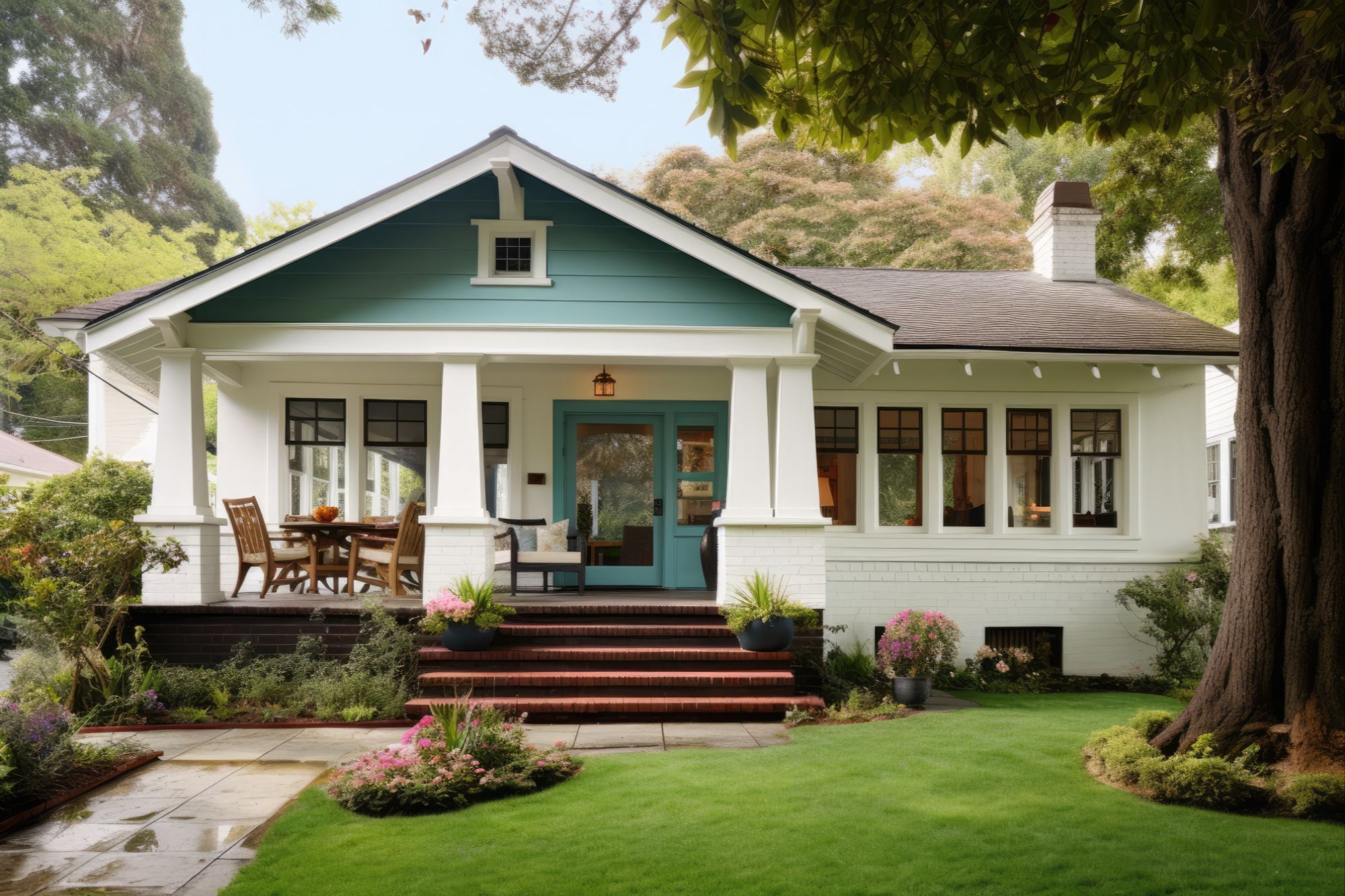
I believe neighborhood selection is the single most consequential decision in any relocation. Your neighborhood determines your daily sensory experience, your children's social world, your commute psychology, your relationship with nature, and your sense of belonging. Let me walk you through the neighborhoods I most frequently recommend to family clients, with honest profiles of each.
Sellwood-Moreland
Sellwood is Portland at its most charming. Historic homes, a genuinely walkable commercial strip, and the beloved Oaks Park amusement area along the Willamette make this neighborhood feel like a small town inside a city. The schools here draw serious attention from family buyers. This is a neighborhood where children ride bikes to school and families know their neighbors by name. Prices reflect its desirability.
Mt. Tabor
If access to nature is a non-negotiable for your family, Mt. Tabor delivers in a way few urban neighborhoods can. The extinct volcanic butte at its center is a 196-acre park with trails, reservoirs, and enough elevation to remind you that you are in the Pacific Northwest. Craftsman homes dominate the architectural palette, and the neighborhood has a quiet, grounded energy that I think is deeply underrated. Read more about neighborhoods like this in our guide to Portland Neighborhoods With the Best Access to Trails.
Woodstock
Woodstock is for families who want vibrancy without pretension. The commercial core on Woodstock Boulevard is lively and locally owned, and Woodstock Elementary offers a sought-after language immersion program that attracts families from across the city. This neighborhood has soul, and it tends to attract the kind of neighbors who show up to community events and actually talk to each other.
Eastmoreland
Eastmoreland is one of Portland's most established and architecturally significant neighborhoods. Tree-lined streets, classic Tudor and Colonial homes, and proximity to Reed College and the Crystal Springs Rhododendron Garden create an environment that feels timeless. Families who choose Eastmoreland tend to be deeply rooted — turnover here is low, which tells you something about resident satisfaction.
Hillsdale (Westside)
For families who are considering the Westside, Hillsdale is the neighborhood I most frequently recommend. The community has a wonderful library branch, good school access, and the particular appeal of being close to OHSU and the Marquam Hill employment corridor. The hills provide both natural beauty and, I will be honest, some challenging topography if you plan to walk everywhere. But the tradeoff in quality of life is typically worth it for the families drawn here.
Montavilla
Montavilla is Portland's best-kept secret for family buyers who want to enter the market without overextending their budget. The commercial district on Southeast 82nd has undergone genuine revitalization, the community has a strong neighborhood association, and the price points are meaningfully lower than Sellwood or Eastmoreland. If you are a first-time buyer or a family that needs to preserve budget for childcare and education, Montavilla deserves serious attention.
For a deeper dive into Eastside living across all these neighborhoods, visit our comprehensive guide to Living on the Eastside of Portland.
What Portland Gets Right (And Why It Matters for Your Family)
I promised honesty, and honesty cuts both ways. Here is what Portland genuinely gets right for families, and what I believe the relocation guides from other regions consistently underestimate.
- No sales tax. Oregon has no sales tax, which over the course of a family's consumer lifetime is a meaningful financial benefit — especially on large purchases like vehicles, appliances, and home goods.
- Outdoor access. Portland is surrounded by world-class outdoor recreation. Mount Hood, the Columbia River Gorge, and the Oregon Coast are all within a short drive. The city's internal park system — 10,000 acres of parks and natural areas — is exceptional by any national standard.
- Food culture and local economy. Portland's restaurant scene, farmers markets, and locally owned business ecosystem create a daily quality of life that families from more corporate-monoculture cities often find genuinely transformative.
- Progressivity and community values. Portland is consistently ranked among the most LGBTQ-friendly, inclusive, and civic-minded cities in the country. For families whose values align with those qualities, this is not a minor amenity — it is a foundational element of where they want their children to grow up. Our LGBTQ-friendly community guide goes into significant depth for families for whom this is a priority.
- Cultural infrastructure. The Oregon Symphony, Portland Art Museum, Oregon Museum of Science and Industry (OMSI), and a thriving literary and theater community give families access to arts and culture that many cities twice Portland's size cannot match.
The Timing Question: Should You Wait?
I get asked some version of this question in almost every client consultation: should we wait for interest rates to come down before we buy? My answer is always the same: that question is only answerable once we know your specific financial situation, your timeline, your family's needs, and your tolerance for uncertainty. I have written a full analysis of this question in our post Should Portland Families Wait for Lower Interest Rates? and I encourage you to read it before making any timing decisions.
What I will say here is this: with 57 days of average market time and 3.2 months of supply, the market is giving families room to breathe and make good decisions. That window does not stay open indefinitely. The families who use this relative calm to do their research, get pre-approved, and engage with an experienced agent tend to be the ones who close with confidence. The families who wait for a perfect moment that may never arrive tend to find themselves making rushed decisions when inventory tightens again.
My Honest Summary: Who Portland Is For
Portland in 2026 is genuinely excellent for families who:
- Have financial clarity about the total cost of ownership, including property taxes, PFA taxes, childcare, and Oregon income tax.
- Prioritize outdoor access, walkability, and a strong local culture over suburban square footage and uniformity.
- Value public school systems that, while imperfect, are graduating students at above-average rates and improving in academic proficiency.
- Want to raise children in a community that reflects progressive, inclusive values and offers genuine neighborhood connection.
- Are willing to do the neighborhood-matching work rather than defaulting to the first listing that has the right number of bedrooms.
If that describes your family, then Portland is not just a reasonable choice — it may be the right one. I would love to help you figure out which version of this city is yours.
Frequently Asked Questions
Is Portland still affordable for families in 2026 compared to other West Coast cities?
At a median sale price of $560,000 to $562,000, Portland remains meaningfully more affordable than Seattle, San Francisco, and Los Angeles. The absence of a state sales tax also helps offset Oregon's income tax burden for many families. However, childcare costs averaging $1,625 per month for infant care and the PFA income tax for high earners make total-cost modeling essential before assuming affordability.
How do Portland Public Schools compare to surrounding districts?
PPS graduates students at an 84% rate, above Oregon's statewide average of 81.8%. Reading proficiency is at 64.9% and improving, while math proficiency is at 57.3%. Many surrounding suburban districts like Lake Oswego, West Linn, and Beaverton show higher academic proficiency scores, which is a genuine tradeoff some families make. The right school system for your family depends on what your children need and what you value in an educational environment.
What is the Preschool for All tax and does it affect my family?
The PFA income tax applies to Multnomah County residents earning above $125,000 as single filers or $200,000 as joint filers, at a current base rate of 1.5%. A scheduled increase to 2.3% has been weighed for a potential one-year pause in 2026. If you are a dual-income professional household, this tax is a real budget line item that your CPA should model as part of your Portland relocation analysis. Check the Portland Revenue Division for the most current published rates.
Which Eastside neighborhoods are best for families with young children?
Sellwood-Moreland, Mt. Tabor, Woodstock, and Eastmoreland are consistently my top recommendations for families with young children on the Eastside. Each offers a distinct personality — Sellwood for its walkability and park access, Mt. Tabor for its nature immersion, Woodstock for its community energy and immersion school, and Eastmoreland for its architectural character and stability. Montavilla is my top recommendation for families who need to enter the market at a lower price point without sacrificing neighborhood quality.
How competitive is the Portland market right now and how much time do I have to make decisions?
With an average market time of 57 days and 3.2 months of supply, Portland is a moderately competitive market that still technically favors sellers but gives buyers meaningful time to be thoughtful. This is a significant shift from the frenzied conditions of recent years. Well-priced, well-located family homes in neighborhoods like Sellwood and Eastmoreland still move faster than the average, so do not mistake market-wide breathing room for unlimited time in the neighborhoods you most want.
Sources
- Oregon Department of Education — School and District Report Cards
- Multnomah County Board Preschool for All tax update
- Portland Revenue Division — PFA Personal Income Tax Tables
- Regional MLS Data, 2026 — Median and Average Sale Price, Months of Supply, Average Market Time
- Multnomah County Assessor's Office — Median Effective Property Tax Rate and Parks Levy Assessment Data
- National Association for the Education of Young Children (NAEYC) — Regional Childcare Cost Benchmarking Data, 2025-2026
Categories
Recent Posts