
Moving from Florida to Portland, Oregon: 2026 Cost Comparison
Moving from Florida to Portland doesn't always mean paying more for housing. Redfin's August 2026 median sale price was $525,000 in Portland, against $650,000 in Miami, $477,000 in Tampa, $415,000 in Orlando, and $308,890 in Jacksonville. Once you add homeowners insurance (Insurify projects about $8,458 a year in Florida versus $1,571 in Oregon for 2026), a typical home in Tampa or Orlando costs about the same each month as one in Portland, and Miami costs far more. Oregon's income tax is the line item that tips the math back toward Florida for most working households.
Most people assume Florida is the cheap option and Portland the expensive one. That was true a few years ago. Today, Florida's insurance market has rewritten the math, and the honest answer depends on which Florida city you're leaving and what you earn.
This guide works through it with current data: home prices, insurance, property and income taxes, what kind of house you'll actually be buying, the climate swap, and where Floridians tend to land in the Portland area. If you're also weighing the move against Texas or California, I've written about those too: moving from Texas to Portland and moving from California to Portland.
Is Portland More Expensive Than Florida?

On price alone, it depends on the city. Here are Redfin's median sale prices for August 2026, with an estimated monthly cost of ownership that includes the item Florida buyers can't ignore: insurance.
|
City |
Median sale price |
1-year change |
Est. monthly cost (P&I + property tax + insurance) |
|---|---|---|---|
|
Miami, FL |
$650,000 |
+2.4% |
about $5,120 |
|
Tampa, FL |
$477,000 |
+9.7% |
about $3,940 |
|
Portland, OR |
$525,000 |
-3.5% |
about $3,710 |
|
Orlando, FL |
$415,000 |
-1.2% |
about $3,520 |
|
Jacksonville, FL |
$308,890 |
+2.8% |
about $2,800 |
Prices: Redfin housing market data for Miami, Tampa, Portland, Orlando, and Jacksonville, August 2026 (Miami and Portland are three-month medians). Monthly cost assumes 10% down at 7.28% (Freddie Mac's early-October 2026 average), each state's average effective property tax rate, and Insurify's projected 2026 statewide average homeowners premium. It excludes flood insurance, HOA dues, and mortgage insurance, all of which matter more in Florida.
Tampa now costs more per month than Portland, Orlando costs about the same, and Miami costs roughly $1,400 more. Only Jacksonville stays clearly cheaper. That's before flood insurance, which many Florida homeowners carry and Portland homeowners rarely need.
Property tax: about even
This one surprises people. According to Construction Coverage's analysis of 2024 Census data, Florida's average effective property tax rate for homeowners is 0.760%, and Oregon's is 0.789%. That's close to a wash.
The systems behave differently, though. Florida's homestead exemption and the Save Our Homes cap protect long-time owners. Oregon caps growth in a property's assessed value at 3% a year, which can leave a home's taxable value well below its market value. My Portland property taxes guide explains it. Either way, pull the actual tax bill for any address on PortlandMaps before you offer. Don't estimate from the price.
Income tax: Oregon is the big new cost
Florida has no state income tax. Oregon taxes income at 4.75% to 9.9%, with most working households in the 8.75% bracket. In my Oregon income tax guide for people moving to Portland, a married couple with $150,000 in taxable income pays about $12,490 a year to Oregon before credits. That's about $1,040 a month, which erases the insurance savings for most households unless you're leaving Miami.
Higher earners living in Portland proper also owe Metro's Supportive Housing Services tax and Multnomah County's Preschool for All tax, which start above roughly $200,000 in joint income.
If you're retired, run the numbers carefully. Oregon taxes most retirement income, including pension and IRA withdrawals, though it doesn't tax Social Security benefits. A tax professional can tell you what that means for your situation. I'm not one.
What offsets it
- No sales tax. Oregon has no general sales tax. Florida's state rate is 6% before local surtaxes.
- Insurance. As shown above, a typical Oregon homeowners policy costs a fraction of Florida's.
- No hurricane deductible. Florida policies often carry a separate hurricane deductible, set as a percentage of your dwelling coverage. Portland homeowners don't budget for one.
How Does Home Insurance in Portland Compare to Florida?
It's much cheaper, and the risk you're insuring against is different. Insurify's 2026 projections put the average Florida homeowners premium at about $8,458 a year, compared with about $1,571 in Oregon. That's based on a standard HO-3 policy for a single-family frame house, with Florida's figure assuming a 5% hurricane deductible. Your quote will depend on the house, the location, and your history, but the gap is real.
What changes is what you worry about.
Flood insurance: less common in Portland
In much of Florida, flood insurance is a line item you plan around. Redfin's climate-risk data, which comes from First Street, rates Tampa's flood risk as severe and Jacksonville's as major. It rates Portland's flood risk as minor. Some Portland properties do sit in flood zones, especially near the Columbia Slough, Johnson Creek, and the rivers, so check the FEMA flood map for any address. Most Portland buyers won't need a flood policy. Your lender will tell you if you do.
Earthquake insurance: the one Floridians don't think about
This is the coverage I make sure every relocating buyer at least asks about. The Oregon Division of Financial Regulation says most homeowner policies don't cover earthquake damage, so you buy it separately. Deductibles are usually 10% or 15% of your coverage amount, not of the loss. On a $300,000 dwelling policy with a 10% deductible, that's $30,000 out of pocket before coverage kicks in.
The Division also notes that older homes may need a seismic retrofit to qualify, and that wood-frame homes generally cost less to insure than brick. Whether earthquake coverage is worth it is a personal call, and it's worth a conversation with an insurance agent before you close, not after.
Selling a Florida condo? Know the new rules
If part of your plan is selling a Florida condo to fund the move, Florida's post-Surfside condo safety law matters to you. According to a summary of SB 4-D by engineering firm Rimkus, buildings three stories or taller need periodic milestone inspections and a structural integrity reserve study. Associations can no longer vote to skip required reserves. That has pushed up HOA dues and special assessments in many buildings, and sellers must disclose those reports and assessments to buyers.
The practical upshot: talk to a Florida agent early about what your condo will realistically net, and don't count on a number until you know your building's inspection and reserve status. Your Portland budget depends on it.
Portland HOAs are a smaller part of the picture
Most Portland single-family homes, especially close-in, aren't in an HOA at all. You'll find HOAs mainly in condos, townhomes, and newer suburban subdivisions. If you're buying a condo here, my guide to what Portland buyers need to know about HOAs covers how to read the budget and reserves. After a Florida condo, you'll know which questions to ask.
What Kind of House Will You Buy in Portland?
Florida buyers are used to judging a house by its roof age, its windows, and how it's built to handle wind and water. In Portland, the inspection checklist changes.
- Wood frame, not concrete block. Much of Florida's single-family housing is concrete block construction, built for wind. Portland homes are overwhelmingly wood frame. That's a good thing for earthquakes, because wood flexes, and the Oregon Division of Financial Regulation notes it also tends to be cheaper to insure for quakes than brick. Wood frame does mean you'll pay more attention to rot, moisture, and pests.
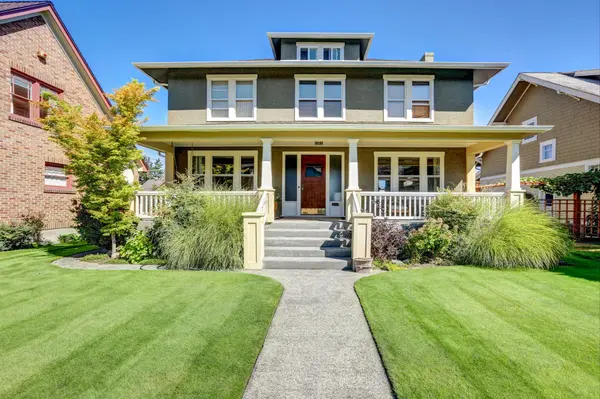
- Older homes, and lots of them. According to NeighborhoodScout's analysis of Census housing data, about 27% of Portland's homes were built in 1939 or earlier, and more than half were built before 1970. Close-in neighborhoods are full of Craftsman bungalows, foursquares, and mid-century ranches. They have character. They can also have original wiring, old sewer lines, and foundations that aren't bolted to the frame. My guide to buying older homes in Portland covers what to inspect.
- Seismic retrofits are a real line item. Many older Portland homes have never been bolted to their foundations or had their cripple walls braced. A retrofit is a common pre- or post-purchase project, and it can matter for earthquake insurance eligibility. Ask your inspector to note it.
- Basements. Florida's water table makes basements nearly nonexistent. In older Portland neighborhoods they're common, and a finished basement can add usable space. Ask about moisture history, because the rainy season tests them every year.
- Air conditioning isn't a given. In Florida, a house without central AC is close to unthinkable. In Portland, many older homes still don't have it. Summers are usually mild, but heat waves happen, so put cooling on your list or your budget.
- Condos are a different market here. If you're coming from a Florida condo lifestyle, Portland has condos, mostly in the Pearl, South Waterfront, and close-in neighborhoods. Most of the housing stock, though, is detached single-family homes. My condo vs. single-family comparison can help you decide.
What Is Portland's Weather Like Compared to Florida?
You're trading heat, humidity, and hurricane season for mild summers and a long gray winter. Under the National Weather Service's 1991–2020 normals for Portland International Airport, July and August highs average about 82°F, July nights drop to about 57°F, and January lows average about 36°F. Summer humidity is low, so 82°F here feels nothing like 82°F in Orlando.
The adjustment is the light. From roughly October through March, Portland gets mostly drizzle and overcast skies, and the days are short. NWS data in my month-by-month Portland weather guide shows about 55 hours of sunshine in December, against about 315 in July. For someone used to winter being Florida's best season, that's the real culture shock.
The natural risks change too:
|
|
Florida |
Portland |
|---|---|---|
|
Biggest seasonal threat |
Hurricanes, June through November |
Wildfire smoke, usually August and September |
|
Flood risk |
Major to severe in many coastal areas |
Minor for most of the city |
|
Heat |
Long, humid summers |
Short summers with occasional heat waves (116°F in the 2021 heat dome) |
|
Low-probability, high-impact risk |
Major hurricane landfall |
A large earthquake |
|
Winter |
Mild and sunny |
Mild, wet, and gray, with occasional ice or snow |
Flood and heat ratings for Florida cities and Portland come from First Street climate-risk data shown on Redfin's market pages.
A few things help Floridians settle in:
- Plan your first winter on purpose. Good lighting at home, an outdoor routine that doesn't wait for sun, and weekend trips to the snow on Mount Hood or to sunnier high desert near Bend all make a difference.
- Buy rain gear, skip the umbrella. Portland's rain is usually light enough that a good jacket beats an umbrella.
- Make a smoke plan. A HEPA air purifier and a well-sealed house with filtered cooling matter during bad smoke weeks.
- Make an earthquake kit. Water, supplies, and a family plan are the Portland version of hurricane prep. The difference is there's no warning, so you set it up once and keep it.
Where Should Floridians Live in Portland?
Start with what you loved about your Florida life and what you're ready to leave behind. Here's how those priorities map onto the Portland area:
|
If you want... |
Look at |
Why |
Price relative to Portland's median |
|---|---|---|---|
|
Water nearby |
Lake Oswego, Sellwood-Moreland |
Lake Oswego is built around its lake. Sellwood sits along the Willamette with riverfront parks and trails |
Lake Oswego well above; Sellwood above |
|
Walkable neighborhood life |
Close-in Eastside: Hawthorne, Belmont, Division, Montavilla |
Coffee shops, restaurants, and parks within walking distance, close to downtown |
Near or above |
|
Newer construction and space |
Happy Valley, Tigard, outer Beaverton |
Newer subdivisions, bigger lots, more of a Florida suburban feel |
Around or above, depending on the area |
|
Value with a small-town feel |
Milwaukie |
Quieter streets and MAX light rail into Portland |
Near |
|
Lock-and-leave condo living |
Pearl District, South Waterfront |
Elevators, amenities, and walkability. South Waterfront has the tram to OHSU |
Varies widely by building |
|
Downsizing |
Close-in condos, single-level homes in the suburbs |
Single-level living is less common in older Portland neighborhoods, so search wider |
Varies |
A few notes on fit:
- If you're coming from a suburb around Tampa, Orlando, or Jacksonville and want a similar newer home with a yard, the southeast and Westside suburbs will feel most familiar. My Portland vs. suburbs guide walks through the trade-offs.
- If you're coming from a walkable part of Miami, the close-in Eastside is the closest match in daily rhythm, minus the beach. My Eastside neighborhoods lifestyle guide breaks it down.
- If you're downsizing or retiring, single-level homes are harder to find close-in, where many houses have stairs to the front door, a second floor, or a basement. My downsizing in Portland guide covers where to look.
- If you have kids, compare school districts, not just cities. Portland Public Schools, Lake Oswego, Beaverton, Tigard-Tualatin, and North Clackamas are separate districts. Start with my Portland school districts guide, and always confirm an address's assigned schools with the district's official boundary finder, because boundaries change.
My Take: Is Moving from Florida to Portland Worth It?
Can I be direct with you? The "Florida is cheap, Portland is expensive" story is out of date. If you're leaving Miami, Portland may actually lower your housing costs. If you're leaving Tampa or Orlando, housing is roughly a wash once insurance is counted. If you're leaving Jacksonville, Portland will cost you more. For almost everyone still working, Oregon's income tax is the new expense that decides it.
So the question isn't really "can I afford Portland?" It's "why Portland?" When someone tells me they're thinking about this move, I ask: why is that important to you? Sometimes the answer is climate risk: they're tired of hurricane season, of insurance renewals that make their stomach drop, and of wondering whether their carrier will leave the state. Sometimes it's a job, family, or wanting four real seasons and the mountains within reach. Those are good reasons. A lower cost of living usually isn't one, unless you're coming from South Florida.
Based on my experience relocating my own family across state lines, three things make this move go better:
- Get a real Florida number first. Know what your home or condo will net after insurance, assessments, and today's market. Everything in Portland flows from that.
- Visit in February, not July. You already know you can handle heat. Find out how you feel about gray.
- Listen to the story of the house. Older Portland homes tell you a lot through their foundation, roof, sewer line, and how they've been updated. Get a thorough inspection and a sewer scope, and ask about seismic retrofits.
Thinking About the Move?
If you're weighing a move from Florida, I'd be glad to help you run the real numbers, including insurance, taxes, and which part of the metro fits your life. Send me a text at 971-443-1770 or email at kerrie@kdrealestatepdx.com and tell me which Florida city you're leaving and what's pulling you to Portland.
Frequently Asked Questions
Is it cheaper to live in Portland or Florida?
It depends on the Florida city. Redfin's August 2026 median sale price was $525,000 in Portland, compared with $650,000 in Miami, $477,000 in Tampa, $415,000 in Orlando, and $308,890 in Jacksonville. Once homeowners insurance is included, Tampa and Orlando cost about the same per month as Portland, and Miami costs more. Oregon's income tax usually makes Portland more expensive overall for working households.
Is homeowners insurance cheaper in Oregon than Florida?
Yes, by a wide margin. Insurify projects an average 2026 premium of about $8,458 a year in Florida and about $1,571 in Oregon for a standard policy. Oregon policies don't include earthquake coverage, which is sold separately.
Does Oregon have a state income tax?
Yes. Oregon taxes income at 4.75% to 9.9%, and most working households pay 8.75% on most of their income. Florida has no state income tax. A married couple with $150,000 in taxable income pays roughly $12,500 a year in Oregon income tax before credits.
Are property taxes higher in Oregon or Florida?
They're about the same on average. Census-based data puts Florida's average effective property tax rate at 0.760% and Oregon's at 0.789%. Actual bills vary widely by address in both states, so check the real tax bill for any home you're considering.
Does Portland get hurricanes?
No. Portland's main natural hazards are wildfire smoke in late summer, occasional heat waves and winter ice storms, and the long-term risk of a large earthquake. Most of the city has minor flood risk.
Do I need earthquake insurance in Portland?
It isn't required, and standard homeowners policies don't include it. Oregon earthquake policies usually carry deductibles of 10% or 15% of the coverage amount. Whether it's worth buying depends on your home, your finances, and your risk tolerance, so talk with an insurance agent before you close.
Where do people from Florida live in Portland?
Buyers who want water nearby often look at Lake Oswego or Sellwood-Moreland. Buyers who want newer homes and more space look at Happy Valley, Tigard, or Beaverton. Buyers who want a walkable city life look at the close-in Eastside, such as Hawthorne, Belmont, or Montavilla.
Sources
- Redfin housing market data, August 2026: Miami, FL, Tampa, FL, Orlando, FL, Jacksonville, FL, Portland, OR (includes First Street climate-risk ratings)
- Insurify, Home Insurance Price Projections (2026)
- Construction Coverage, Where Are U.S. Property Taxes Highest? (2026 edition, U.S. Census Bureau 2024 American Community Survey data)
- Freddie Mac, Primary Mortgage Market Survey
- Oregon Division of Financial Regulation, Earthquake insurance
- Rimkus, What SB 4-D Means for Your Condo
- NeighborhoodScout, Portland, OR Real Estate and Housing Data (U.S. Census ACS 2024)
- National Weather Service, Portland Climate Book (1991–2020 normals)
- PortlandMaps, City of Portland property information
- Florida Department of Revenue, Sales and Use Tax
- KD Real Estate: Oregon Income Taxes for People Moving to Portland, Portland Property Taxes Explained, What Portland Weather Is Actually Like
Categories
Recent Posts