
Downsizing in Portland: When It Makes Sense and Where to Look
The five-bedroom house that once buzzed with activity now feels cavernous. The yard that delighted your children has become a weekend burden. The maintenance costs keep climbing while rooms sit unused. If this sounds familiar, you're not alone—and you're not necessarily looking at this because you're entering retirement.
Downsizing in Portland isn't just for empty nesters anymore. Millennial families are increasingly choosing to downsize from larger suburban homes to more manageable properties in walkable neighborhoods. Remote workers who no longer need dedicated office space are reconsidering how much house they actually need. And yes, baby boomers are making the classic move from family homes to condos and smaller properties—with nearly 12,000 Americans turning 65 every day over the next two years, this trend is accelerating.
This guide will help you determine whether downsizing makes sense for your situation, what financial and lifestyle factors to consider, and where in Portland to look for your next right-sized home.
Why Portland Residents Are Choosing to Downsize
The decision to downsize is deeply personal, but certain patterns emerge across demographics. Understanding the common motivations can help you assess whether downsizing aligns with your own goals.
Financial Motivations
- Reducing monthly housing costs: Mortgage payments, property taxes (around 1.1% annually in Portland), insurance, and utilities add up. A smaller home can significantly reduce your monthly obligations.
- Lowering maintenance expenses: Fewer square feet means less to repair, paint, heat, cool, and maintain. For a 2,500 sq ft home vs. a 1,200 sq ft condo, you're looking at dramatically different maintenance budgets.
- Unlocking home equity: The average homeowner has $299,000 in equity. If you've owned your Portland home for 10+ years, you've likely built substantial equity. Downsizing can free up hundreds of thousands of dollars for retirement, investment, or simply reducing financial stress.
- Eliminating debt: Some downsizers sell a larger home with a mortgage to buy a smaller property outright, achieving mortgage-free living.
Lifestyle Motivations
- Less time on maintenance, more time on life: Portland's culture prioritizes experiences and outdoor recreation. Spending every Saturday on yard work or home repairs runs counter to that ethos. A smaller home or condo frees up time for hiking, travel, or simply enjoying the city.
- Walkability and urban amenities: Many Portland downsizers trade suburban space for inner-city walkability. Being able to walk to restaurants, coffee shops, farmers markets, and transit aligns with Portland values and can reduce car dependency.
- Simplification and decluttering: For many, downsizing is about intentional living—keeping what matters, letting go of what doesn't. A smaller home forces curation rather than accumulation.
- Aging in place (or preparing to): Single-story condos or homes with no stairs become increasingly appealing as mobility considerations emerge. Downsizing now can prevent a forced move later.
- Environmental values: Smaller homes have smaller carbon footprints—less energy to heat and cool, less space to fill with possessions. For environmentally-conscious Portlanders, this matters.
Life Stage Motivations
- Empty nesters: The classic downsizing scenario—kids have moved out, and the family home feels too large. According to NAR, the top reasons people 60+ move are to be closer to family, wanting a smaller or more functional home, and reducing monthly expenses.
- Millennial families right-sizing: Families who bought larger homes during the pandemic remote-work era are now reconsidering. With return-to-office mandates or simply a desire for less house to manage, they're moving to appropriately-sized properties in more desirable locations.
- Divorce or relationship changes: Life transitions often necessitate housing changes. A smaller, more affordable home can provide a fresh start.
- Career transitions: Whether it's retirement, a career change, or increased travel for work, shifting professional circumstances can make a large home impractical.
When Downsizing Makes Financial Sense
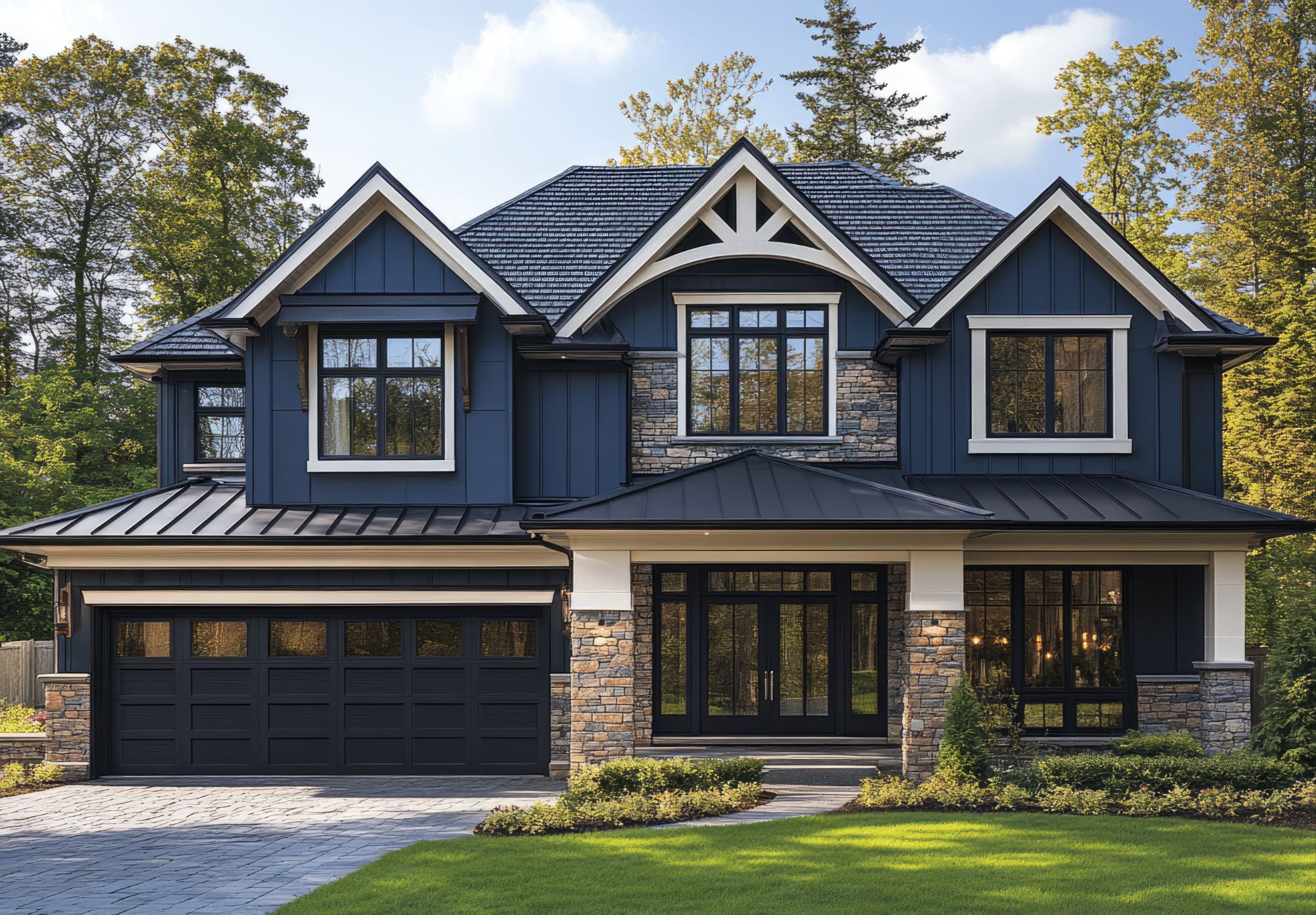
Downsizing isn't always the financially optimal choice, despite the intuitive appeal. You need to run the actual numbers for your situation. Here's how to think through the financial calculus:
Calculate Your True Savings
Start by comparing your current housing costs to projected costs in a smaller property:
Current Home (Example: 2,400 sq ft house):
- Mortgage: $2,800/month
- Property taxes: $550/month
- Insurance: $150/month
- Utilities (gas, electric, water): $300/month
- Maintenance (1% of home value annually): $420/month
- Total: $4,220/month
Downsized Home (Example: 1,100 sq ft condo):
- Mortgage: $0 (paid cash from equity)
- Property taxes: $320/month
- HOA fee: $450/month (varies widely—more on this below)
- Insurance: $80/month
- Utilities: $150/month
- Total: $1,000/month
Monthly savings: $3,220 | Annual savings: $38,640
Plus, you might unlock $200,000-400,000+ in equity that can be invested, saved for retirement, or used for other goals.
Factor in Transaction Costs
Downsizing involves selling your current home and buying a new one. Understanding the actual costs is crucial for running your numbers correctly.
Following the 2024 NAR settlement, commission structures have changed significantly. Sellers are no longer automatically responsible for the buyer's agent commission.
Selling costs:
- Listing agent commission: typically 2.5-3% of sale price
- Other closing costs: 1-2% (title, escrow, transfer taxes)
Buying costs:
- Closing costs: 2-3% (inspection, appraisal, title, lender fees if financing)
Total transaction costs: Realistically 3.5-5% on the sell side, plus 2-3% on the buy side. On a $600,000 home sale, you're looking at approximately $21,000-30,000 in selling costs, plus $12,000-18,000 in buying costs if purchasing a $400,000 condo—for a total of around $33,000-48,000 in transaction costs.
At $38,000+ in annual housing savings, you recoup these transaction costs in roughly 1-1.5 years—after which the savings flow directly to your bottom line year after year.
Consider the Opportunity Cost
If downsizing unlocks $300,000 in equity that you invest conservatively at 5% annual return, that's $15,000/year in additional income. Combined with $38,000 in annual housing cost savings, you're looking at $53,000/year in improved cash flow. For many people, this is the difference between financial stress and financial security in retirement or career transitions.
When Downsizing Might Not Make Sense
It's equally important to recognize when downsizing isn't the right move:
- Your mortgage is nearly paid off with low interest: If you have 5-10 years left on a 3% mortgage, your monthly costs may already be low. With current mortgage rates around 6.2%, selling and taking on new debt doesn't make sense for many people.
- The Portland market isn't favorable: If home prices have softened but condo prices have remained high, the price differential may not justify a move. Market timing matters.
- You still need the space: If you have adult children who frequently stay, run a home business, or genuinely use all your rooms, downsizing may create more problems than it solves.
- Emotional attachment is too strong: If leaving your home would cause genuine grief that outweighs the benefits, that's a valid reason to stay. Financial optimization isn't everything.
- Health or mobility will require another move soon: If you're downsizing now but will need assisted living or a different arrangement in 2-3 years, multiple moves may be more disruptive than staying put temporarily.
Best Portland Neighborhoods for Downsizing
Where you downsize matters as much as whether you downsize. Different Portland neighborhoods appeal to different priorities:
Pearl District: Urban Condo Living
Best for: Empty nesters wanting walkable urban lifestyle, culture enthusiasts, those embracing car-free living
The Pearl offers the most polished urban downsizing experience in Portland. Condos range from studios to two-bedrooms, with modern amenities, secure building access, and often include fitness centers and concierge services. You're walking distance to Powell's Books, restaurants, galleries, and the waterfront. The median condo price is $425,000 as of late 2025.
Price range: $300K-700K+ for condos
Considerations: HOA fees can be substantial. Newer buildings average $300-900+/month, while luxury buildings can exceed $1,300/month. Street parking is limited. Downtown Portland has faced some livability challenges, so visit in person.
Why it works: True lock-and-leave lifestyle. Maintenance is handled. Cultural amenities are at your doorstep.
Sellwood-Moreland: Small-Town Feel in the City
Best for: Those wanting a neighborhood feel with character, outdoor access, and a slower pace
Sellwood offers smaller craftsman homes, bungalows, and some newer condos and townhomes. The neighborhood has a main street with antique shops and local restaurants, plus Sellwood Riverfront Park for walking. It feels like a small town within Portland. Recent condo listings have been in the $565,000 range for 3-bedroom, 2.5-bath units.
Price range: $400K-650K for smaller homes/townhomes
Considerations: Still requires yard/home maintenance unless you find a townhome with HOA. More car-dependent than inner eastside neighborhoods.
Why it works: Community-oriented, safer feel, access to nature, but still in Portland proper.
Hawthorne/Division Area: Walkable Inner Southeast
Best for: Those prioritizing walkability, dining, and bike-friendly lifestyle
This area offers excellent walkability to restaurants, bars, shops, and transit. Smaller homes (1,000-1,500 sq ft bungalows) and newer townhomes/condos are available. Strong bike infrastructure and neighborhood vitality.
Price range: $450K-650K for smaller homes, $350K-550K for condos/townhomes
Considerations: Can be noisy near commercial corridors. Parking can be challenging. Some older homes need updates.
Why it works: Vibrant neighborhood life, can easily live without a car, strong sense of community.
Alphabet District (Northwest): Urban Village Character
Best for: Those wanting neighborhood feel with urban walkability, proximity to Forest Park
Northwest Portland's Alphabet District (streets named alphabetically: Burnside, Couch, Davis, etc.) offers Victorian homes, smaller bungalows, and newer condos. It has NW 23rd Avenue for shopping/dining and immediate access to Forest Park trails.
Price range: $400K-700K+ depending on property type
Considerations: Parking is extremely limited. Streets are steep in some areas. Can be pricey for what you get.
Why it works: Beautiful neighborhood, nature access, walkable, well-established community.
Lake Oswego: Upscale Suburban Downsizing
Best for: Those wanting a smaller home but maintaining suburban lifestyle, prioritizing safety and amenities
Lake Oswego offers upscale townhomes, condos, and smaller single-family homes. The area is known for excellent schools (if grandkids visit), low crime, lakefront access, and well-maintained infrastructure. More traditional suburban feel.
Price range: $400K-900K+ depending on property type
Considerations: Less walkable, more car-dependent. Less urban character. Can feel suburban/homogeneous.
Why it works: Safe, well-maintained, good medical access, strong sense of security.
Southwest Portland & Western Suburbs: Practical Options
Best for: Budget-conscious downsizers, those with health care needs (close to major hospitals)
Southwest Portland and western suburbs like Beaverton and Hillsboro offer more affordable downsizing options. Townhomes in Southwest Portland average around $513,000, while condos in Beaverton/Hillsboro can be found in the $250K-450K range. Access to MAX light rail provides transit into Portland.
Price range: $250K-550K for condos/townhomes
Considerations: Less walkable, less cultural character, more car-dependent.
Why it works: Affordability, newer construction, proximity to healthcare, practical for daily living.
Types of Downsized Homes: Pros and Cons
Once you've decided to downsize and identified target neighborhoods, you need to choose what type of property works best:
Condos
Pros:
- True lock-and-leave lifestyle—travel without worry
- Exterior maintenance handled by HOA
- Often include amenities (gym, storage, parking)
- Security (locked buildings, sometimes doorman/concierge)
Cons:
- HOA fees are an ongoing cost that can be significant—investigate thoroughly before buying
- Less privacy (shared walls, neighbors above/below)
- No outdoor space (or very limited)
- HOA rules can be restrictive
Townhomes
Pros:
- More space than condos (often 1,200-1,800 sq ft)
- Often have small outdoor space (patio or yard)
- Exterior maintenance often covered by HOA
- Feels more like a house than a condo
Cons:
- Still have HOA fees
- May have stairs (less ideal for aging in place)
- Might still require some maintenance
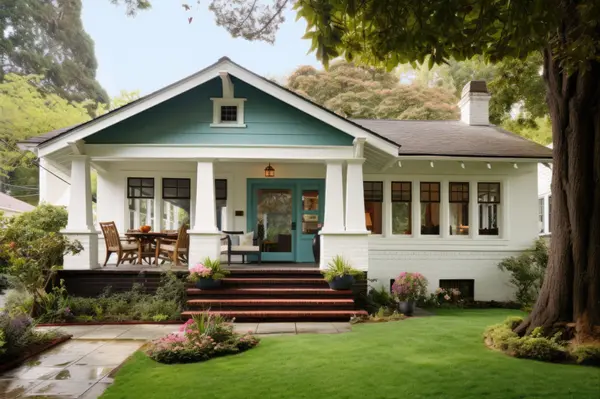
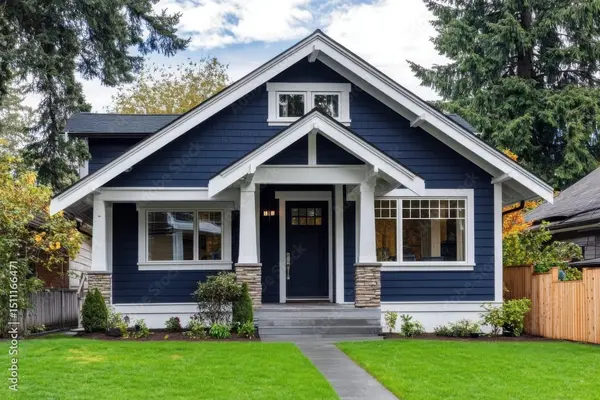
Smaller Single-Family Homes (Bungalows)
Pros:
- No HOA fees or restrictions
- More privacy, your own yard
- Portland bungalows have character and charm
- Single-story options good for aging in place
Cons:
- Still requires all maintenance (yard, exterior, systems)
- Older homes may need repairs/updates
- Can't truly lock-and-leave for extended periods
The Emotional Side of Downsizing
The financial analysis is straightforward. The emotional side is not. Downsizing means leaving a home filled with memories, letting go of possessions, and often accepting a life stage transition you may not feel ready for.
Common Emotional Challenges
- Grief and loss: This is the house where your kids grew up, where holidays happened, where life unfolded. Leaving can feel like losing part of your identity.
- Fear of regret: What if you downsize and hate it? What if you need the space later?
- Overwhelm from decluttering: Decades of accumulated possessions need to be sorted, donated, sold, or discarded. This is exhausting.
- Identity shift: Moving from a house to a condo can feel like admitting you're "old" or that your active family life is over.
Strategies for Emotional Success
- Focus on what you're gaining, not losing: Freedom from maintenance, reduced financial stress, more time for experiences, a home that fits your current life rather than your past life.
- Take photos before you go: Document your home, your favorite spaces, the details you love. This helps with closure.
- Hire help for decluttering: Professional organizers, estate sale companies, and donation services can make this process far less overwhelming.
- Give yourself time: Don't rush. If possible, give yourself 6-12 months to prepare emotionally and logistically.
- Visit your new neighborhood repeatedly: Build excitement about your new life. Walk the streets, try the coffee shops, imagine your routine there.
Practical Steps for Downsizing Successfully
Once you've decided to downsize, here's how to execute it effectively:
Step 1: Assess Your Needs
- How much space do you actually need? One bedroom? Two for guests?
- Do you need dedicated office space, or can you work at a dining table?
- Is outdoor space essential, or can you use neighborhood parks?
- What are your must-haves vs. nice-to-haves?
Step 2: Get Your Finances in Order
- Get a professional home valuation for your current property
- Calculate your likely proceeds after selling costs (remember: 3.5-5% in commission and closing costs)
- Get pre-approved for a mortgage if you'll need one (even if small)
- Understand your budget for the new property, including HOA fees if buying a condo
Step 3: Declutter Before Listing
- Start 3-6 months before you plan to sell
- Use the "keep, donate, sell, trash" method for each room
- Consider an estate sale or consignment for valuable items
- Measure your new space and only keep furniture that will fit
Step 4: Decide on Timing
- Sell first, then buy: Gives you maximum negotiating power and clear budget, but requires temporary housing
- Buy first, then sell: No temporary housing needed, but you'll carry two properties briefly
- Contingent offers: Make your new home purchase contingent on selling your current home (less common in competitive markets)
Step 5: Work with the Right Professionals
- Real estate agent with downsizing experience: They should understand both the emotional and practical aspects, and be clear about the new commission structure
- Professional organizer or estate sale company: Takes the burden off you for decluttering and liquidation
- Financial advisor: Helps you optimize the financial side, especially around taxes and investment of proceeds
Final Thoughts: Downsizing as a Choice, Not a Compromise
Downsizing in Portland doesn't have to feel like settling for less. When done thoughtfully, it's a strategic choice that aligns your housing with your current life—not the life you lived 10 or 20 years ago.
The right-sized home frees up financial resources, reduces stress and maintenance burden, and often improves your quality of life by putting you in a more walkable, vibrant neighborhood. Whether you're an empty nester ready to explore Portland's urban core, a millennial family trading suburban sprawl for neighborhood character, or simply someone who values experiences over square footage, Portland offers excellent downsizing options.
The key is being honest about what you need versus what you think you should want, running the actual numbers for your situation, and choosing a neighborhood and property type that supports the lifestyle you want to live today—and tomorrow.
Considering downsizing in Portland? Let's find your right-sized home. Reach out anytime.
We specialize in helping Portland residents navigate downsizing decisions—from financial analysis to finding the perfect neighborhood match. Contact us for a free consultation and personalized downsizing strategy.
Categories
Recent Posts