
Should You Buy a Condo or a Single-Family Home in Portland? (2026 Guide)
If you're buying in Portland in 2026, one of the biggest decisions isn't just where to live — it's what to buy. Condo or single-family home?
For high-earning millennials, first-time buyers, and move-up households, this question comes up constantly. And the right answer has less to do with price than most people expect — and far more to do with lifestyle, risk tolerance, and how long you're planning to stay.
Let's break it down.
First: What's Different About Portland in 2026?
Portland is in a genuinely more balanced market right now. Housing inventory has climbed to around 4.3 months of supply — squarely in the range that signals neither a seller's nor buyer's market. Compared to the frenzied conditions of 2021 and 2022, buyers today have real leverage, more room to negotiate, and longer timelines to make good decisions.
But here's what matters for this conversation: condos and single-family homes are not behaving the same way inside that broader market.
The median home price in Portland was approximately $455,000 in January 2026, down 6.2% year-over-year, and median days on market for homes was 55 days. Condos? A different story — the regional median condo price was $325,000 in 2025, down 3% from the year before, and the average cumulative days on market for condos surged to 102 days in 2025 — a 32% increase from the prior year. In the Pearl District specifically, condos were sitting at an average of 117 days on market as of early March 2026.
That context matters enormously when you're deciding what to buy.
The Case for Buying a Condo in Portland
Condos tend to appeal to buyers who are optimizing for location and lifestyle over square footage and land.
Lower Entry Price
The numbers are real. Across the Portland metro, the median condo price sits at $325,000, compared to single-family homes in the $500,000–$525,000 range — and that gap widens considerably in desirable inner neighborhoods. In the Pearl District, the median condo list price was around $459,000 in early 2026, while single-family homes in adjacent Northwest Portland neighborhoods run significantly higher. For buyers who want walkability and urban access, a condo is often the only way to afford the address.
Low Maintenance Living
No yard. No roof replacement. No exterior maintenance decisions. For busy professionals or frequent travelers, that's not a small thing — the HOA handles what would otherwise be your Saturday afternoon.
Amenities
Secure parking, gyms, rooftop decks, concierge service — some buildings offer all of it. Whether that justifies the HOA fee depends entirely on whether you actually use it. If you do, the value is real. If you won't, you're paying for someone else's lifestyle.
The Tradeoffs
This is where buyers need to be clear-eyed. Portland's condo market carries specific risks that have become more visible in 2026:
HOA dues are rising fast. Average monthly HOA dues in the Portland region rose 13% in 2025 to $497.10. In Multnomah County, that average was $513.20 — a 14.4% year-over-year jump. Zoom out further: HOA fees in Portland have inflated by 30% since 2020, with an average cost of $0.46 per square foot. That trajectory matters when you're modeling long-term monthly costs.
Reserve funds can hide ugly surprises. A healthy HOA maintains strong financial reserves for major repairs. An underfunded one passes those costs to you via special assessments — large, one-time fees levied on all owners when something significant needs fixing. Before you close on any condo, review the HOA financials the way you'd review a company's balance sheet.
Financing is more complicated than buyers expect. Lenders don't just evaluate your finances on a condo purchase — they evaluate the building's financial health too. A building with too many renters, ongoing litigation, or inadequate reserves can be deemed "non-warrantable," which limits your financing options and may require a larger down payment. And if you're a first-time buyer hoping to use an FHA loan, that's only available for pre-approved condo projects — not all buildings qualify.
Rental restrictions can kill your exit strategy. Many condo associations limit the percentage of units that can be rented at any time. If you later want to hold the property as a rental, the HOA may not allow it — or may put you on a waitlist.
Appreciation runs slower. Historically, condos have appreciated at a slower rate than single-family homes. National data suggests single-family homes have outpaced condos by 2–3% annually in appreciation over a ten-year period — a gap that compounds significantly over time. Nationally, there were 72% more condo sellers than buyers in August 2025, a sign that the broader condo market is navigating meaningful headwinds.
The Case for Buying a Single-Family Home
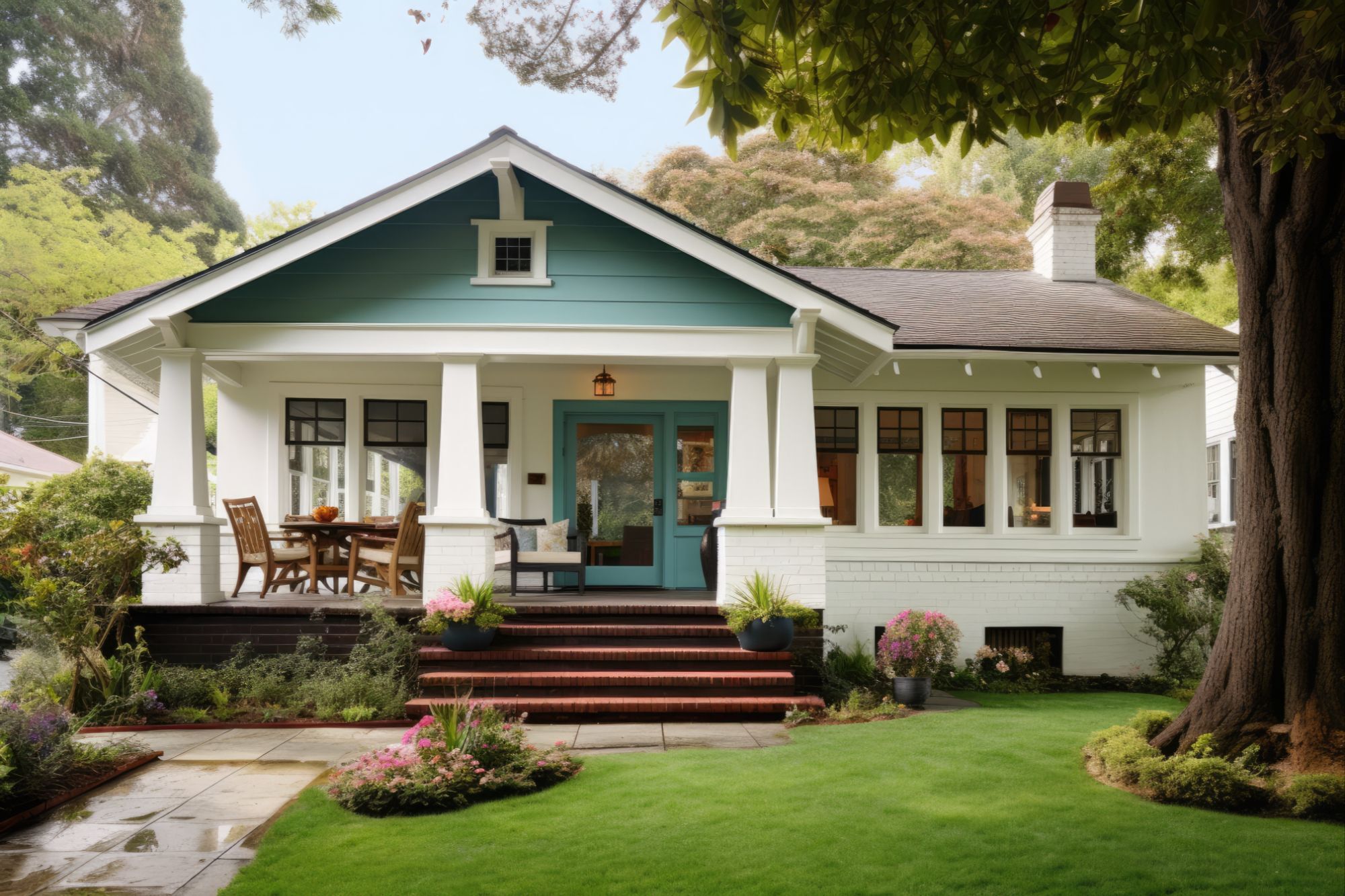
Single-family homes remain the long-term appreciation engine in the Portland metro. Here's why.
Land Value
When you buy a house, you're buying the structure and the land beneath it. Land is finite, and it's the primary driver of long-term value appreciation — which is the core reason single-family homes have historically outperformed condos as investments. A condo gives you a unit inside a building. A house gives you a piece of the ground.
Stronger Appreciation Trends
Historically in Portland, single-family homes outperform condos in appreciation, recover faster in slower markets, and maintain broader buyer demand — particularly in family-friendly neighborhoods and strong school districts. Those dynamics are especially pronounced in 2026, where the condo market is soft while move-in-ready single-family homes continue to attract strong demand.
Autonomy
No board. No dues increases. No rental restrictions. No approval process for renovations. You own your property and make your own decisions.
The Tradeoffs
Higher purchase price is the obvious one — single-family homes in Portland run $500,000–$525,000 at the median, and in popular inner neighborhoods can easily exceed $750,000. You're also taking on full responsibility for maintenance and repairs: roof, sewer, foundation, yard, all of it.
In older Portland homes — Craftsman bungalows, mid-century ranches — sewer lines and foundations deserve particular attention. A sewer scope is standard due diligence on any SFH purchase here, not optional. Budget for maintenance as a real ongoing cost, not a theoretical one.
You're trading convenience for autonomy. That's the deal.
Appreciation vs. Lifestyle: Reframing the Question
Most buyers approach this as a financial question and get stuck. The better frame is strategic.
If your primary goal is maximum long-term equity growth, flexibility, or rental potential — single-family homes typically win. The land ownership, the appreciation trajectory, and the lack of HOA restrictions all point the same direction.
If your primary goal is walkability, urban access, low-maintenance living, or a lock-and-leave lifestyle — a condo can be the right choice. Especially in 2026, when the soft condo market means more negotiating power for buyers and longer due diligence timelines.
Neither is inherently better. They serve different objectives. The mistake is choosing based on purchase price alone without accounting for HOA dues, appreciation trajectory, financing complexity, and what the exit looks like.
Time Horizon Changes Everything
Staying 7–10+ years? Single-family homes tend to win on appreciation and resale flexibility. The land value compounds, and the buyer pool for a well-located house is broad.
Staying 3–5 years? Condos carry more resale sensitivity in shorter windows, particularly in older buildings or markets with rising HOA dues. Shorter timelines require sharper price discipline — especially right now, with condo inventory elevated and days on market stretching past 100 days in many buildings.
Portland-Specific Considerations
A few things that are uniquely relevant here:
Building age matters a lot. A well-managed building with strong reserves in a newer structure is a completely different product from an older building facing deferred maintenance. Review the HOA's reserve study, budget, and any pending litigation before you make an offer.
Rental caps are common. If there's any chance you'll convert to a rental, verify the HOA's rental policy before you fall in love with a unit.
School district priorities. Single-family homes in strong school districts hold their value differently than condos in the same geography. If schools are part of your thesis, a house in the right boundary is usually the cleaner play.
The Biggest Mistake Buyers Make
They choose based only on the purchase price.The real question is: what type of property supports our lifestyle and financial plan over the next decade?
A condo that looks cheaper at purchase but carries $500/month in HOA dues, slower appreciation, and financing complexity may cost more — in total — than a house that seemed out of reach. Model both before you decide.
A Smarter Way to Decide
Before you commit, run a real side-by-side comparison:
- Monthly payment difference (including HOA dues)
- Appreciation scenarios over your likely time horizon
- Rental flexibility if plans change
- Resale demand in your specific target neighborhoods
- HOA financial health and reserve status for any condo you're seriously considering
Once you see the full picture, the decision usually becomes much clearer.
Thinking about buying in Portland and want to run the comparison on a specific property type or neighborhood? Schedule a 15-minute call — we'll build the analysis before you commit.
Categories
Recent Posts