
St. Johns and Cathedral Park: Portland's Most Underrated Family Neighborhood in 2026
If you've spent any time researching Portland neighborhoods, you know the pattern. You fall in love with Sellwood-Moreland, then see the price tags. You look at Division Street, and the condos feel too small or too expensive for what you actually need. Someone — a coworker, a friend, a random comment in a Facebook group — mentions St. Johns, and you're not entirely sure what to make of it. Is it up-and-coming in a good way, or is that just real estate agent code for not quite there yet? Is it actually affordable, or has it already been discovered? And is it really somewhere you'd want to raise kids?
Those are fair questions, and they deserve straight answers. St. Johns sits in North Portland, tucked up near the St. Johns Bridge and Cathedral Park along the Willamette, and it has quietly been building a reputation as one of the few Portland neighborhoods where a family can still buy a real house — not a starter condo, not a fixer that needs $150,000 of work — at a price that doesn't require two tech salaries. But reputation and reality don't always match, so let's look at the actual numbers on home prices, schools, and safety before you make any decisions.
This post is an honest look at what St. Johns is, what it isn't, and whether it deserves a spot on your shortlist in 2026. If you're early in the process and want broader context first, the complete Portland home-buying guide for families is a good place to ground yourself. But if St. Johns specifically has your attention, let's dig in.
What Makes St. Johns Different?
St. Johns has a running joke among longtime residents: it's Portland's fifth quadrant. The city is famously divided into four — Northeast, Northwest, Southeast, Southwest — but St. Johns, technically in North Portland, has always felt like its own thing. Geographically separated from the rest of the city by industrial land along the Columbia Slough and the working waterfront, it developed its own commercial downtown, its own schools, its own civic identity. For most of Portland's history, it was its own city entirely — it wasn't annexed until 1915. That independent streak hasn't gone away.
What you notice when you spend time there is the village-within-a-city quality. The commercial corridor along N Lombard Avenue and N Philadelphia Avenue is made up almost entirely of independent businesses — local coffee shops, a hardware store that's been around for decades, bookshops, breweries, a farmers market that runs seasonally. You will not find a Starbucks anchoring the main strip or a national chain restaurant rebranding the neighborhood's identity. St. Johns is notably LGBTQ-friendly, with a community culture that tends toward inclusivity and a live-and-let-live ethos that a lot of families — particularly those who want their kids growing up in a genuinely diverse, open environment — find appealing rather than off-putting.
Gentrification is happening here — it would be dishonest to pretend otherwise. New construction has crept in, and home values have risen meaningfully over the past decade. But St. Johns hasn't yet been fully repackaged as a lifestyle brand the way some Portland neighborhoods have. The people who've lived here for twenty years and the young families moving in are still largely sharing the same coffee shop, the same neighborhood association meetings, the same block parties. That kind of authentic community character is genuinely rare in a major West Coast city in 2026, and it's a real part of why St. Johns keeps coming up in conversations about where Portland families are looking.
What Can You Actually Afford in St. Johns?
Let's start with the numbers people actually care about. Zillow's typical home value for St. Johns as of May 31, 2026 sits at $431,287. Redfin shows a median sale price of $431,900 for February 2026 and a three-month average ending April 2026 closer to $463,000. On the listing side, Realtor.com shows a median listing price around $399,000, which reflects homes currently on the market rather than closed sales. Taken together, you're looking at a neighborhood where a realistic purchase price for a single-family home lands somewhere in the $400,000 to $460,000 range depending on condition, size, and timing.
To understand why that matters, you need the comparison. Portland's citywide median is currently running in the $550,000 to $560,000 range. Sellwood-Moreland — a neighborhood that gets a lot of deserved attention for its walkability, schools, and community feel — sits around $665,000. St. Johns is running roughly $100,000 to $130,000 below the city median and more than $200,000 below Sellwood. For a family trying to decide what neighborhood they can actually afford to buy into, that gap is not a footnote. It's the difference between getting into a house and staying in an apartment for another two or three years.
Here's what those numbers mean at today's rates. Freddie Mac's 30-year fixed rate as of June 11, 2026 is 6.52%. On a $430,000 purchase with 10% down, you're financing roughly $387,000. At 6.52%, your principal and interest payment lands at approximately $2,450 per month. Keep in mind that figure covers principal and interest only — it does not include property taxes or homeowner's insurance, which in Oregon typically add another $400 to $600 per month to your total housing cost. That's a serious monthly commitment — nobody should sugarcoat it. But run the same math on a $650,000 Sellwood home with 10% down, and you're looking at a principal and interest payment closer to $3,700 per month before taxes and insurance. The St. Johns option frees up somewhere between $600 and $800 per month on the loan payment alone — money that could go toward school activities, home improvements, savings, or simply breathing room. If you're working through the financing side for the first time, the first-time home buyer guide for Portland walks through the full picture. One important note: well-priced homes in St. Johns are selling at or near asking. This is not a market where buyers are routinely landing 10% below list. Come prepared.
Schools in St. Johns: An Honest Look
School quality is often the question that determines whether a neighborhood makes a family's list or gets cut, so let's be direct. James John Elementary, the neighborhood's primary K-5 school, earns a B- overall on Niche and a 5 out of 10 on GreatSchools — ratings that reflect below-average standardized test performance relative to Oregon peers. What those aggregate scores don't capture is that James John earns a Grade A for diversity. That's not a consolation prize. For families who believe that children benefit from growing up in classrooms that reflect the actual complexity of the world — different income levels, ethnicities, languages, family structures — a school with genuine demographic diversity is a meaningful feature, not a footnote. Test scores matter. So does the education that comes from sharing a lunchroom with kids whose lives look nothing like yours.
George Middle School serves St. Johns students in grades 6 through 8. Parents who've been involved there describe a strong sense of community and robust after-school programming. Honestly, its academic rankings fall in the lower half of Oregon middle schools, and it would be unfair to pretend otherwise. It is a school with real strengths in culture and extracurriculars, and real room for growth on academic outcomes. Roosevelt High School completed a $92 million modernization in 2018, and the physical campus is genuinely impressive. Roosevelt has built a notable career and technical education program, offering pathways in areas like construction, health sciences, and culinary arts that many east- and west-side schools don't replicate. Test scores still track below what you'd see at Westview or Lincoln on the west side, and that's a real difference for families who prioritize that metric.
The honest summary: if school rankings and standardized test performance are your primary filter for a neighborhood, you should have a candid conversation about west-side Portland options — and those trade-offs are worth understanding clearly before you commit. If what you're looking for is a community-oriented school environment, genuine demographic diversity, access to CTE programs, and a neighborhood where your kids will be embedded in real community rather than a homogeneous enclave, St. Johns is worth serious consideration. There is no objectively right answer here — it depends on what your family actually values.
Is St. Johns Portland Safe for Families?
Safety is the question people sometimes hesitate to ask directly, so let's name it plainly. Crime index data for St. Johns shows property crime running somewhat above the city average. The primary driver is property crime — larceny and theft specifically — rather than violent crime, and that distinction matters when you're evaluating a neighborhood for your family. If you're comparing St. Johns to a quiet suburb in Beaverton or Lake Oswego, you will find a difference. If you're comparing it to other urban Portland neighborhoods, it's not an outlier. It's a city neighborhood that requires the same awareness and common sense you'd apply anywhere in an urban environment.
Residents who know the neighborhood well generally describe the eastern and southwestern portions of St. Johns as quieter and more settled. Crime data also shows a downward trend since 2024, which tracks with broader stabilization patterns across parts of North Portland. St. Johns is not a suburban bubble — there are blocks that require more awareness than others, and that's honest. But it is not a neighborhood that should be crossed off a family's list based on a surface-level crime index comparison. Context matters, and the data here does not tell a story of a neighborhood in crisis. For a broader look at how Portland neighborhoods compare on safety, the Portland safety guide for families in 2026 is worth reading alongside this one. Understanding what you're walking into — clearly, without either alarm or denial — is always the right approach.
Cathedral Park and the Outdoor Life
Cathedral Park is 23 acres of riverfront parkland sitting directly beneath the Gothic steel arches of the St. Johns Bridge — one of the most photographed bridges in the Pacific Northwest, and honestly one of the most beautiful in the country. The park hugs the west bank of the Willamette, and in June 2024 it got a serious upgrade: a $900,000 swimming and fishing dock, a joint project between the Human Access Project and Portland Parks & Recreation, opened on June 29, 2024. That's not a minor amenity — that's a genuine neighborhood infrastructure investment that gives kids and families legal, safe access to swim in the Willamette for the first time in a generation. Add an off-leash dog area, an outdoor stage, picnic lawns, and the Cathedral Park Jazz Festival (which has called this park home since 1980), and you have a neighborhood anchor that most Portland neighborhoods at any price point would envy.
If the river isn't enough, Smith and Bybee Wetlands Natural Area sits just a few minutes away — one of the largest urban wetlands in the United States. There's a 0.5-mile paved Interlakes Trail, wildlife observation blinds, a canoe launch, and regular sightings of bald eagles and painted turtles. This is not a manicured city park with a swing set. It's a genuine wild ecosystem inside city limits, and for families who want their kids growing up with real exposure to nature — not just a screen showing nature — it's a competitive advantage that's genuinely hard to quantify in a Zillow listing.
On the transportation side, St. Johns scores an 86 Bike Score (Very Bikeable) and a 63 Walk Score (Somewhat Walkable). The commercial core walks easily; outer residential streets still require a car for some errands. But that bike score is real, and it's about to get better: the N Willamette Boulevard Active Transportation Corridor project is adding three miles of new protected bikeways connecting St. Johns to the rest of North Portland, with completion targeted for 2026. If you're weighing neighborhoods by outdoor lifestyle, I'd encourage you to read my broader post on Portland neighborhoods with the best trail and park access — St. Johns consistently ranks at the top of that conversation. This level of riverfront and wetland access, at this price point, is genuinely rare in Portland.
The St. Johns Commercial District
The commercial heart of St. Johns runs along N Lombard Avenue and N Philadelphia Avenue, and it has the feel of a main street that hasn't been fully discovered yet — which is either a selling point or a dealbreaker depending on what you're looking for. What you'll find: independent coffee shops where the owner knows your name by your third visit, Occidental Brewing with a sprawling beer garden, a German Wursthaus doing sausages and schnitzel, food truck pods, two theater pubs, and a collection of boutique shops that reflect the neighborhood's creative, DIY sensibility. What you won't find: a Starbucks anchoring every corner, a chain pharmacy eating up a corner lot that used to be something interesting, or the kind of forced-cool that comes with full gentrification. Compare that to Hawthorne or Mississippi Avenue — both neighborhoods I love — and you'll notice that St. Johns still has friction. That friction is part of what makes it feel real.
I'll be honest with you: the food scene in St. Johns is not the most diverse in Portland. If you're someone who needs a wide range of cuisines within walking distance, you'll want to factor that in. But the flip side is that what's there is genuinely good and genuinely local, and the neighborhood is growing. New spots have been opening steadily over the past few years as buyers and renters discover that you can get a lot more square footage for your dollar up here. The commercial district has character — the kind that takes decades to build and that more expensive neighborhoods often sacrifice in the process of becoming expensive.
What I'd Tell You If You Were My Client
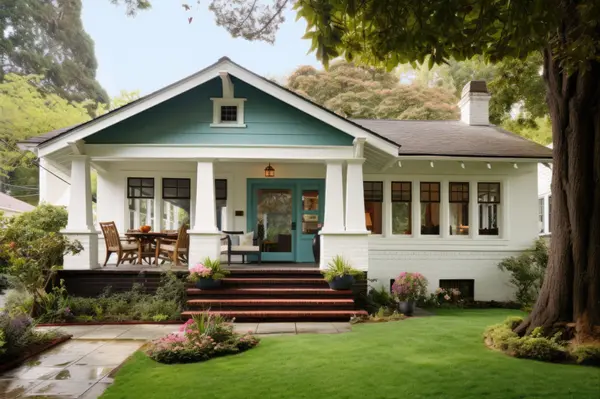
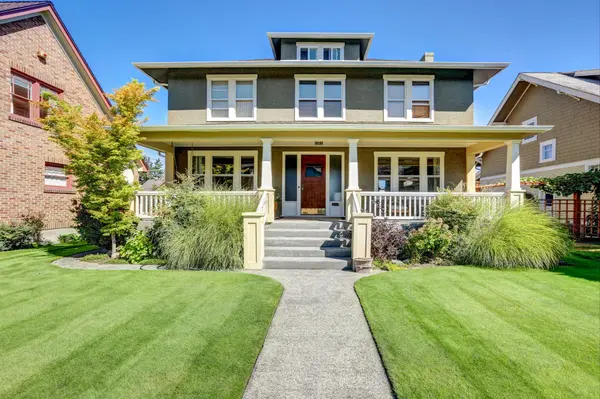
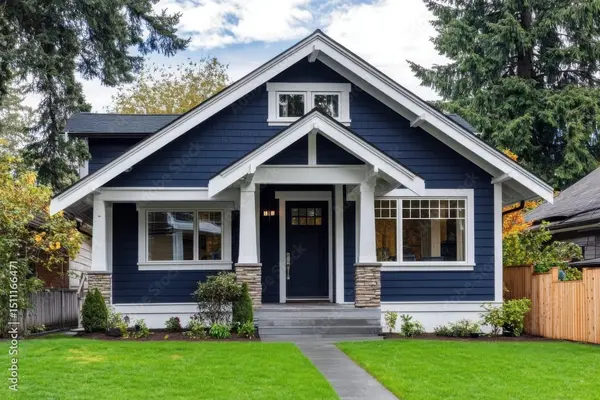
If you sat across from me at a coffee shop and asked me honestly whether St. Johns was worth considering for your family, here's what I'd say: St. Johns is one of the very few places left in Portland where a family can buy a detached home — real backyard, real bedrooms, real space to actually live — for under $450,000. In a city where the median home price is hovering around $550,000 to $560,000, that gap is not a rounding error. That's the difference between signing a purchase agreement and signing another lease renewal. For a first-time buyer trying to build equity, that difference compounds over time in ways that matter enormously. Affordability at this level, this close to the city, doesn't last forever — and in St. Johns, the window is narrowing.
What I'd also tell you — because I'd rather have the real conversation now than have you regret something later — is to do your homework on the schools if that's your top filter: James John Elementary has strong community engagement but mixed academic test scores, and Roosevelt High School is mid-modernization, so visit both before you decide. For families prioritizing outdoor living, I'd point you toward my guide to Portland neighborhoods with the best trail and park access — St. Johns holds its own against any neighborhood in this city on that measure. And because urban property crime is a real consideration in St. Johns, just as it is across much of Portland, I'd also encourage you to read the Is Portland safe for families in 2026? guide so you have accurate context rather than a rosy summary.
The question I'd encourage you to sit with isn't whether St. Johns is perfect — no neighborhood is. The question is whether it fits your actual priorities. For families who want serious outdoor access, a community where neighbors still know each other, an LGBTQ-inclusive environment, independent local businesses, and housing they can actually afford in Portland — it's hard to build a stronger case for anywhere else in the city right now. If any of this resonates, I'd genuinely love to talk. I work with buyers across Portland and I know this market well. Start with my first-time home buyer guide for Portland if you're earlier in the process, or browse the KD Real Estate blog for more neighborhood deep dives. And when you're ready to have a real conversation, reach out — I'm here.
Frequently Asked Questions About St. Johns Portland
Is St. Johns Portland a good neighborhood for families?
Yes — with honest caveats. The affordability is a genuine and significant strength: detached homes under $450,000 are still findable here, which is increasingly rare in Portland. The community is welcoming and LGBTQ-inclusive, with a tight-knit, neighborhood-oriented culture that families often describe as one of St. Johns' greatest assets. Cathedral Park, Smith and Bybee Wetlands, and strong bike infrastructure give families exceptional outdoor access. The main considerations to research carefully are school performance data and property crime rates, both of which vary and deserve a clear-eyed look before you commit.
What are home prices like in St. Johns Portland in 2025?
As of mid-2025, the median sale price in St. Johns hovers in the $420,000–$460,000 range for detached single-family homes, though well-updated or larger properties can push past $500,000. That represents a meaningful discount compared to Portland's citywide median of roughly $550,000–$560,000. The market here moves — competitively priced homes in good condition routinely attract multiple offers — so buyers should be prepared to act decisively. Working with an agent who knows North Portland specifically will help you understand which streets and blocks hold value best.
How are the schools in St. Johns Portland?
James John Elementary, the primary neighborhood school, earns strong marks for diversity and community involvement, and families embedded in the school speak well of the teachers and culture. Academic test score data is mixed, however, and families for whom school performance metrics are a top priority should review current data on Niche's James John Elementary profile before deciding. Roosevelt High School serves the neighborhood at the secondary level and is currently undergoing a major bond-funded modernization that is meaningfully upgrading its facilities. Private school options and open-enrollment programs within Portland Public Schools are also worth exploring if the neighborhood schools don't fully meet your criteria.
Is St. Johns Portland safe?
St. Johns has a mixed safety picture that deserves an honest answer. Property crime — car break-ins, package theft, occasional vandalism — runs higher than in some other Portland neighborhoods and is a real factor to weigh. Violent crime rates are more moderate, and the neighborhood has an active community association and engaged residents who work to maintain the area. For detailed, current statistics, DoorProfit's St. Johns crime data is a useful starting point. I'd also recommend reading the Is Portland safe for families in 2026? guide for broader context on how St. Johns compares across the city.
How do I get around St. Johns without a car?
St. Johns scores an 86 Bike Score and a 63 Walk Score, making it one of North Portland's most bikeable neighborhoods. N Lombard Avenue is the main commercial corridor and is walkable for daily errands, while TriMet bus lines connect the neighborhood to downtown Portland and other parts of the city. The ongoing N Willamette Boulevard Active Transportation Corridor project will add three miles of protected bikeways, further improving car-free options when it completes in 2026. That said, outer residential blocks still benefit from car access for less frequent errands, so your experience will depend somewhat on exactly where you land within the neighborhood.
Is St. Johns Portland up and coming?
St. Johns has been described as "up and coming" for at least a decade, which is actually a useful signal: it means the character is intact but the prices are rising. As of mid-2026, it still offers some of the most attainable single-family home prices in Portland — under $450,000 for a detached home is possible here in a way it simply isn't in Sellwood, Division, or the Alberta Arts District. Whether that window stays open depends on broader market forces, but right now, the neighborhood is still in the window.
Suggested Internal Links
- Portland neighborhoods with the best trail and park access
- Is Portland safe for families in 2026? A neighborhood-by-neighborhood guide
- First-time home buyer guide for Portland, Oregon — 2026
- The complete Portland home-buying guide for families
- Living on the Eastside of Portland: real neighborhoods, honest prices
- Explore all KD Real Estate blog posts
Sources
- Zillow — St. Johns Portland Home Values (May 2026)
- Redfin — St. Johns Portland Housing Market Data
- Realtor.com — St. Johns Portland Listings
- Freddie Mac — 30-Year Fixed Mortgage Rate (FRED, June 2026)
- City of Portland — Cathedral Park
- PDX Monthly — Cathedral Park Swim Dock Opens June 2024
- Willamette Week — New Cathedral Park Dock, June 2024
- Travel Oregon — Smith and Bybee Wetlands Natural Area
- Niche — James John Elementary School
- Portland Public Schools — Roosevelt High School Modernization
- DoorProfit — St. Johns Portland Crime Statistics
- Walk Score — St. Johns Portland (97203)
- City of Portland — N Willamette Boulevard Active Transportation Corridor
Categories
Recent Posts