
Milwaukie, Oregon: The Portland Suburb Families Are Discovering in 2026
You've done the math on Sellwood. You've walked the streets of Eastmoreland and loved every charming bungalow — right up until you saw the price tag. Maybe you've been watching Portland's Eastside for a year or two, refreshing listings, running mortgage calculators at midnight, wondering if the neighborhood you actually want is just permanently out of reach. If that sounds familiar, you're not alone. And there's a good chance you haven't looked closely enough at Milwaukie.
Milwaukie, Oregon sits just four miles south of Portland's city limits, sandwiched between the Willamette River and the wooded edges of Clackamas County. It has the kind of bones that buyers spend years chasing in Southeast Portland — walkable streets, a genuine farmers market, light rail access, and real community investment — at a price point that still makes sense for dual-income families doing honest math in 2026. Whether you're living on the Eastside of Portland and ready to upsize, or relocating to the region and trying to figure out where your dollar goes furthest, this guide is built for you.
I'm Kerrie, a Portland-area real estate agent at KD Real Estate, brokered by eXp Realty. My focus is the Eastside corridor — from inner SE Portland down through the communities families are quietly claiming before everyone else catches on. Milwaukie is at the top of that list right now. Let me show you why.
What Does Living in Milwaukie, Oregon Actually Feel Like?
Milwaukie has a downtown district with locally owned coffee shops and restaurants, a Sunday farmers market that draws serious vendors and serious produce, and the kind of block-level neighborliness that gets harder to find the closer you get to the city core.
The Milwaukie Farmers Market runs Sundays from May through October with more than 75 vendors. It's a real market — not a weekend tourist event — and it's where you'll get a read on the community faster than any neighborhood tour. Families with strollers, retirees with canvas totes, teenagers working the berry stands. It reflects the actual demographic mix of the city.
On the recreational side, Milwaukie punches well above its weight. The Trolley Trail is a six-mile paved multi-use path that connects Milwaukie directly to the Springwater Corridor — one of the region's most beloved trail networks. If you're a family that moves through life on bikes and running shoes, this connection matters enormously. For more on how Milwaukie stacks up for trail access compared to other Portland-area communities, the Portland neighborhoods with best trail access post on the KD Real Estate blog lays it out in detail.
There's also something genuinely exciting happening at Kellogg Lake, where a dam removal project is currently underway. When complete, it will restore fish passage on Kellogg Creek and open new ADA-accessible trails through a naturalized greenway corridor. That's not a distant promise — it's active construction, and it will meaningfully increase the livability and ecological character of central Milwaukie within the next few years.
For LGBTQ families and queer buyers, Milwaukie has built a visible and welcoming community. The city hosts an annual Milwaukie Pride Celebration every June, complete with drag performances and programming anchored by queer-owned local businesses. This isn't performative — it's a reflection of who actually lives here and how the community shows up for its residents.
One more thing that often surprises buyers: Milwaukie residents are not subject to Portland's municipal income tax structure or the Multnomah County personal income taxes that apply to Portland proper residents. That's a real financial advantage — one that compounds quietly over the years and is worth factoring into your relocation math.
How Do Milwaukie Home Prices Compare to Portland in 2026?
This is where the conversation usually shifts for buyers who've been circling. Let's put the numbers on the table.
As of mid-2026, Milwaukie's median home sale price sits in the $519,000–$526,500 range, according to data from Zillow and Realtor.com. Portland proper, by comparison, is running a median in the $534,000–$545,000 range. On paper, that gap might not look dramatic — but it reflects only part of the story.
When you break Milwaukie down by ZIP code, the picture gets more useful. ZIP 97222, which covers central Milwaukie and the neighborhoods closest to the MAX Orange Line, shows a median listing price around $497,000 — a meaningful entry point for families targeting that sub-$500K threshold. ZIP 97267, which encompasses Oak Grove and Jennings Lodge to the south, comes in around $535,000, reflecting larger lots and more suburban character.
What makes these numbers matter more than the raw figures is what they represent in a competitive market. Milwaukie homes are moving fast. Median days to pending is currently 18 days per Zillow, and the sale-to-list ratio is sitting at approximately 100.6%. Homes are regularly selling at or slightly above asking price. This is a market with real demand — buyers should come in prepared, not assuming they'll have room to negotiate down from list.
Property taxes in Clackamas County — where Milwaukie is located — run at an effective rate of roughly 0.98% to 1.1% of assessed value. On a $519,000 home, that puts your annual tax bill in the neighborhood of $5,100 to $5,700, which is comparable to Multnomah County rates for similar price points.
For families building a full financial picture, I'd also point you toward the Portland home-buying guide for families and the First-Time Home Buyer in Portland guide on the KD Real Estate blog — both of which walk through total cost of ownership, not just purchase price. If you're new to this market, that framing will save you from surprises.
The value proposition in Milwaukie isn't just about price-per-square-foot. It's about what you get for the number: a home with a yard, in a city with functioning infrastructure, light rail access, and a school district that genuinely performs. Which brings us to schools.
Are Milwaukie Schools Good for Families?
This is the question I hear most often from families considering Milwaukie, and the answer is more encouraging than the school district's relative obscurity might suggest.
Milwaukie sits within the North Clackamas School District (NCSD), and the district's performance data is worth paying attention to. According to NCSD's own reporting, the district's four-year graduation rate for the 2023–24 school year was 86.8% — well above Oregon's state average of 81.8%. Niche places NCSD in the top 30% of Oregon school districts overall. That's not a flashy number, but it's a meaningful one — it means more students are completing high school here than in the majority of Oregon districts.
At the elementary level, two schools stand out. Sojourner School consistently ranks in the top 25% of Oregon elementary schools and has developed a reputation for strong academic programming and family engagement. View Acres Elementary holds an A- rating on Niche, reflecting solid academics and a positive school culture. These are schools where families who care about education are actively choosing to buy.
At the high school level, the picture is nuanced in a useful way. Milwaukie High School carries a B overall rating on Niche — a solid, respectable mark. But the option that genuinely excites families with kids who have strong creative or performing arts interests is the Milwaukie Academy of the Arts, an arts-focused public charter high school within the district. For a family with a kid who's serious about music, theater, or visual arts, having a specialized public school option within the district — at no additional cost — is a meaningful differentiator.
No school district is perfect, and NCSD is no exception. Families with students who have specific special education needs or who are navigating IEP processes should do deeper research and connect directly with the district. But as a baseline, NCSD delivers on the fundamentals, and the graduation data suggests it's doing better than most at keeping students on track.
Schools are the foundation — but for most families, they're not the only piece of the relocation puzzle. In Part 2, we'll get into what the commute from Milwaukie to Portland actually looks like on the MAX Orange Line, dig into neighborhood-by-neighborhood character so you know where to focus your search, and look at Milwaukie's safety data, which tells a genuinely reassuring story for families comparing it to the city.
How Long Is the Commute from Milwaukie to Portland?
This is usually one of the first questions I hear from families considering the move, and it's a fair one. Commute time is quality-of-life time. The good news: Milwaukie's connection to Portland is genuinely one of its strongest selling points.
The MAX Orange Line runs directly through Milwaukie, with Main Street Station sitting right in the heart of downtown. From there, you're looking at roughly 15 to 20 minutes to Portland State University and about 35 minutes end-to-end to Union Station. Trains run every 15 minutes during peak hours, which means you're not planning your morning around a single departure time. For families where one partner works downtown or near the South Park Blocks, this is a commute that genuinely works without owning two cars.
If you're a cyclist or just someone who wants car-free options beyond rail, the Trolley Trail is worth knowing about. It's a six-mile paved path that connects Milwaukie south toward Gladstone and north into the Springwater Corridor — which means you can pedal your way into Southeast Portland on protected trail for much of the route. I've seen buyers underestimate how much this matters until they actually try it. It matters a lot.
Drivers will find that Milwaukie sits just south of Portland on McLoughlin Boulevard, with reasonable access to I-205 for east-side employers and Highway 99E as an alternate route. Traffic is real, as it is anywhere in the metro. But you're not sitting in the West Hills tunnel or grinding through the Broadway Bridge. For many families, that alone is a meaningful difference in daily stress.
And if you're weighing this against other Pacific Northwest cities, I've written a full breakdown in my Portland vs. Seattle comparison for families that gets into commute culture, cost tradeoffs, and what suburban life actually looks like in both metros.
Is Milwaukie, Oregon Safe?
I want to answer this honestly, not reassuringly. There's a difference, and families deserve the real version.
According to NeighborhoodScout crime data, Milwaukie's violent crime rate is 46% lower than the national average — and less than half of Portland's rate. That's not a spin on the numbers. That's a meaningful gap. The city earns a B crime grade on most major rating platforms, which puts it solidly above average for an Oregon city of its size.
Property crime is the more common concern, as it is in most inner-ring suburbs. Residential burglary does occur, though rates sit well below urban Portland. The practical advice I give buyers here is the same I'd give anywhere: know the specific block you're buying on, talk to neighbors, look at the street-level context. A city-wide stat is a starting point, not the whole picture.
What I will say is that Milwaukie feels like a place where people are invested in their community. You see it in the farmers market regulars, the trail volunteers, the families at Milwaukie Lake Park on a Saturday morning. That civic investment shows up in how neighborhoods are maintained and how neighbors look out for each other. Data and lived experience tend to align here.
One financial safety note worth flagging: Milwaukie sits in Clackamas County, outside Portland city limits. That means residents are not subject to Multnomah County's personal income tax or Portland's municipal income tax — a meaningful financial advantage that adds up quietly but consistently over time for working families.
What Are the Best Milwaukie Neighborhoods for Families?
Milwaukie isn't monolithic. Depending on what your family needs — walkability, lot size, price point, proximity to nature — different parts of the city will feel like very different answers. Here's how I'd break it down.
Historic Milwaukie
If walkability is your priority, this is your neighborhood. Downtown Milwaukie has real bones — the kind of mixed-use energy that Portland's inner Eastside has, but quieter and more navigable. The Coho Point mixed-use development has added density and neighborhood vitality, and the former City Hall building has been repurposed into a brewery, which tells you something about the culture here. The Milwaukie Farmers Market anchors the warm months with local produce, food vendors, and the kind of community gathering that suburbs often promise but rarely deliver. The MAX station is right here, making this the top choice for car-light households.
Ardenwald
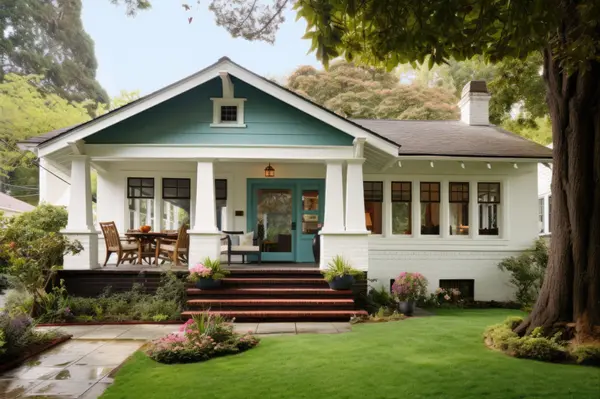
Ardenwald is the neighborhood I point young professional families toward first. It borders Sellwood, shares that same tree-canopy character with mature Douglas firs over bungalows and mid-century homes, and carries what I'd call a Portland-lite feel without the Portland price tag or the Portland municipal tax burden. Buyers who fell in love with Sellwood or Woodstock but kept getting outbid tend to find Ardenwald feels immediately familiar — and immediately more achievable.
Oak Grove
Oak Grove offers something different: larger lots, more breathing room, and a suburban-rural feel that some families actively want. You'll find 1970s split-levels with generous yards, Rivervilla Park access along the Willamette, and a ZIP code — 97267 — where the median hovers around $535,000. If your family needs a dog run, a vegetable garden, or space for an ADU, Oak Grove is worth a serious look. It's not the most walkable zone, but it compensates with space and relative affordability compared to similar lot sizes closer to Portland.
Linwood
Linwood is the quietest entry point into Milwaukie, with a median around $443,000 and a strong amenity score relative to its price. It's a genuinely residential neighborhood — the kind where families plant roots and stay. Less trendy, more stable. For buyers who want to stretch their dollar without sacrificing community infrastructure, Linwood deserves a spot on the shortlist.
For more on how trail and park access factors into neighborhood quality across the Eastside corridor, I've covered this in depth in my post on Portland neighborhoods with the best trail access for families.
What I'd Tell You If You Asked Me Directly
I came to real estate with a finance and MBA background, and I spent a lot of time in the data before I ever put a sign in a yard. When I focused my practice on the Eastside corridor — Portland's inner SE, the close-in suburbs, the Clackamas County border communities — it wasn't accidental. These are the neighborhoods where the math actually works for families who are trying to do something genuinely hard: buy a home in a high-cost metro, stay close to the city, and not sacrifice the things that make daily life feel good.
Milwaukie fits that profile better than most places I work in. It's not perfect — no place is, and I'll have that conversation with you honestly if you want it. But the combination of commute access, safety data, price point, outdoor infrastructure, and genuine community investment is difficult to replicate in this region at this price.
PDX Parent named Milwaukie a neighborhood families love, and in my experience, that tracks. What I'd add is that it's also a neighborhood families stay in — which is a different and arguably more meaningful endorsement.
If you're weighing timing — whether to buy now or wait for rates to shift — I've written through that question carefully in my post on whether Portland families should wait for lower interest rates or buy now in 2026. It's worth reading before you decide either way.
Frequently Asked Questions About Living in Milwaukie, Oregon
Is Milwaukie, Oregon a good place to raise a family?
Yes, and the data supports it rather than just the feeling. Milwaukie has violent crime rates 46% below the national average, strong elementary schools with dedicated parent communities, six miles of paved trail connecting to the regional path network, MAX Orange Line access to Portland, and a median home price that still allows families to buy meaningfully below Portland proper. PDX Parent has highlighted it specifically as a family-friendly community, and the 2026 Kellogg Lake dam removal project will add new ADA-accessible trails and riverfront improvements that make it even more compelling for active families.
How far is Milwaukie from downtown Portland?
By MAX Orange Line, you're looking at 15 to 20 minutes from Main Street Station to Portland State University, and about 35 minutes to Union Station at the north end of the line. By car on McLoughlin Boulevard, it's typically 15 to 25 minutes depending on time of day. The Trolley Trail also provides a car-free cycling route north into the Springwater Corridor and Southeast Portland for families who commute by bike.
What are home prices like in Milwaukie, Oregon in 2026?
Milwaukie's median home price sits in the low-to-mid $500,000s as of 2026, with meaningful variation by neighborhood. Linwood tends to be the most accessible entry point around $443,000, while Oak Grove runs closer to $535,000 for larger lots. Historic Milwaukie and Ardenwald reflect their walkability and proximity to Portland's Sellwood border, with prices trending toward the mid-$500,000s. These figures represent real value relative to comparable Portland neighborhoods, which routinely run $100,000 to $150,000 higher for similar square footage.
Is Milwaukie, Oregon LGBTQ-friendly?
Milwaukie has a growing and visible LGBTQ community, anchored by an annual Milwaukie Pride Celebration in June that includes drag performances, queer-owned business booths, and community socials. Its location adjacent to Portland — one of the most LGBTQ-affirming cities in the country — means the broader culture, services, and social infrastructure of that community are genuinely accessible. For a fuller picture of LGBTQ life across the region, I'd point you to my post on whether Portland is LGBTQ-friendly for relocators.
Does Milwaukie have the Portland city income tax?
No — and this is a financial detail that surprises a lot of buyers. Because Milwaukie is in Clackamas County and outside Portland city limits, residents are not subject to Portland's municipal income tax or the Multnomah County personal income tax. For dual-income families, this difference adds up meaningfully over time and is one of the quiet but real financial advantages of choosing Milwaukie over a comparable Portland neighborhood.
What I'd Leave You With
Milwaukie doesn't always make the headlines that neighborhoods like Alberta Arts District or Division Street do. It doesn't need to. What it offers is something more durable: a city that works — for commuters, for families with kids in public schools, for buyers who want outdoor access without leaving the metro, and for people who want to feel like they belong somewhere rather than just live somewhere. If you're exploring what living in Milwaukie, Oregon could actually look like for your family, I'd love to help you think it through. Browse more on the KD Real Estate blog, or reach out directly and let's talk through what fits.
Sources
- TriMet MAX Orange Line Schedule and Route Information
- NeighborhoodScout — Milwaukie, Oregon Crime Data
- City of Milwaukie, Oregon — Official City Website
- Milwaukie Farmers Market
- PDX Parent — Neighborhood We Love: Milwaukie
Suggested Internal Links
Categories
Recent Posts