
What Two Incomes Can Actually Buy in Portland, OR in 2026
If you're a dual-income couple researching Portland real estate right now, you've probably had some version of this conversation at the kitchen table: We both have good jobs. We're not being reckless. So why does it still feel like we're chasing something just out of reach?
It's a fair question, and it deserves a real answer — not a cheerful blog post that glosses over the math, and not a doom-scroll through headlines that make homeownership sound like a fantasy. The truth is somewhere more nuanced and more actionable than either of those extremes.
This post walks you through what two incomes can realistically buy in Portland in 2026, neighborhood by neighborhood, with actual numbers. Not hypothetical figures from a rosy calculator — real price data, real mortgage math, and honest context about what you're getting for your money.
A note on the data: Median prices and market statistics referenced here draw from Redfin's March 2026 Portland data, the RMLS March 2026 Market Action Report, and the Realtor.com April 2026 Portland report. Mortgage rate figures reflect the Freddie Mac Primary Mortgage Market Survey and Bankrate's current rate data from late April and early May 2026. Real estate markets shift. Use this as a starting framework, not a final underwriting document.
The Honest Answer: What Two Incomes Gets You

Let's start with the benchmark most financial guides use: the 28% rule. Under this standard, your monthly housing costs — principal, interest, taxes, and insurance — shouldn't exceed 28% of your gross monthly income. Lenders use it as a general gauge for how much mortgage you can comfortably carry.
Here's what that looks like in practice. To purchase a $500,000 home in Portland with 20% down, you'd need a gross household income somewhere between $131,000 and $139,000 per year. That's not a stretch goal — that's the baseline for not feeling financially squeezed every month.
Now consider the context: Portland's overall median household income is approximately $88,792, and the median millennial household income sits at roughly $99,620 (U.S. Census Bureau, 2025 estimates). Two incomes close the gap significantly — but they don't automatically clear the bar. A household with two earners bringing in $65,000 each reaches $130,000 combined, which puts a $500,000 home within range. Two earners at $55,000 each land at $110,000 combined, and that $500,000 home starts creating real financial pressure once you layer in property taxes, HOA fees, and the inevitable costs of ownership.
The good news: dual-income households earning $140,000–$160,000 — which is above both citywide benchmarks — are in a genuinely strong position in Portland's market. None of this means buying is impossible at lower income levels. It means buying well requires knowing exactly which neighborhoods match your specific numbers, and resisting the pull toward neighborhoods that are aspirational but financially punishing.
Portland Home Prices by Neighborhood: Where Your Budget Actually Lands
The citywide median sale price in Portland is approximately $524,000 as of March 2026 (Redfin). The April 2026 median list price had softened to $499,750, down 5.7% year-over-year according to Realtor.com — a signal worth paying attention to. Roughly 25% of Portland listings saw price cuts in spring 2026, and active metro inventory has climbed above 6,500 listings, up more than 10% year-over-year. That's not a buyer's market, but it's meaningfully different from the frenzy of 2021 and 2022.
That single citywide number also masks enormous variation. Portland is not one market — it's a collection of micro-markets that behave quite differently depending on neighborhood, housing stock, and buyer demand. Here's how key areas are priced right now:
- SE Portland median: $453,000 — the most accessible entry point among established inner-ring neighborhoods
- NE Portland median: $560,000 — higher demand, strong walkability, proximity to desirable schools
- Sellwood-Moreland: $597,500 — charming and sought-after, with a village feel along the river (Redfin's Sellwood-Moreland data)
- Alberta Arts District: $667,000 — creative energy and strong community identity, now firmly premium-priced
- Beaumont-Wilshire: $755,000 — NE Portland's upper tier, with excellent schools and tree-lined streets to match
- Eastmoreland: $867,000 — Portland's most prestigious established neighborhood, priced accordingly
Your budget doesn't just determine whether you can buy in Portland — it determines which Portland you can access. A household buying at $450,000 is navigating a different set of trade-offs than one buying at $600,000, even if both feel like "the same city" from the outside.
If NE Portland's upper tier is on your radar, our guide to Alameda, Irvington, and Beaumont-Wilshire walks through what you're actually getting for the price. And if schools are a central factor in your search, the Portland school districts guide breaks down what access looks like by neighborhood and price point.
The Monthly Payment Reality
Mortgage rates as of early May 2026 are sitting around 6.40% for a 30-year fixed loan — 6.30% per Freddie Mac's April 30 survey, and approximately 6.44% per Bankrate as of May 6. That's not the 3% era, and it's not the 7.5% peak of late 2023. It's a middle zone that requires clear-eyed math rather than either euphoria or despair.
With 20% down at 6.40%, here's what your principal and interest payment looks like at different price points:
- $400,000 purchase: ~$2,000/month P&I
- $500,000 purchase: ~$2,500/month P&I
- $600,000 purchase: ~$3,000/month P&I
Add property taxes (budget roughly $400–$600/month depending on assessed value), homeowner's insurance (typically $100–$200/month), and any HOA dues, and your true all-in monthly cost rises meaningfully above those figures. A $500,000 home with 20% down might run closer to $3,200–$3,400 per month in total housing costs. That's the number that matters — not just the mortgage payment in isolation.
One important variable: the 20% down assumption. Many dual-income buyers — especially those earlier in their careers — don't have $80,000–$120,000 sitting liquid. If that's your situation, Oregon Housing and Community Services (OHCS) and the Portland Housing Bureau both offer down payment assistance programs worth understanding. Our guide to Portland down payment assistance programs lays out what's actually available and how the math changes.
If you're wrestling with the timing question — lock in now or wait for rates to fall — I've written separately about whether to wait for lower rates, which works through that decision with real numbers rather than guesswork.
What $400k–$600k Actually Buys in Portland Today
Numbers on a page are one thing. What does your money actually get you in Portland's current market? Here's a realistic picture by price band.
Around $400,000–$450,000
At this range, you're looking at condos, townhomes, or smaller single-family homes in outer SE Portland — think 2-bedroom bungalows or updated 3-bedroom homes in Woodstock, Lents, or Foster-Powell. The trade-off is almost always either space or location, rarely both. If a condo is on your radar, the condo vs. single-family home comparison is worth reading before you commit to either path.
Around $500,000–$550,000
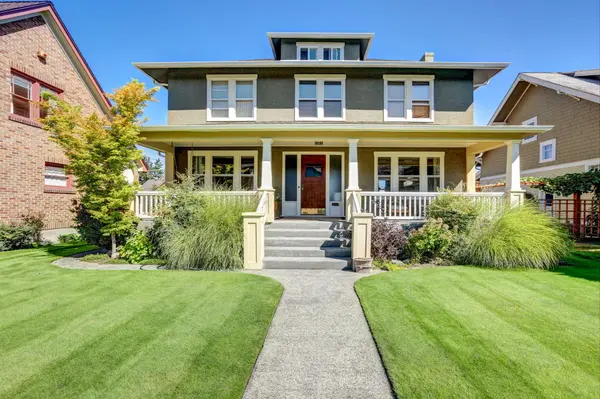
This is the sweet spot for many dual-income buyers. In SE Portland, $500,000–$525,000 gets you a solid 3-bedroom, 1.5-bath home in an established neighborhood with good walkability. In NE Portland, you're at or just below the median — competitive situations are likely but not constant. You'll find homes with real character — original hardwoods, covered porches, updated kitchens — though rarely a home that checks every box without something left to improve.
Around $550,000–$600,000
Options open meaningfully here. Sellwood-Moreland becomes accessible. Mt. Tabor and parts of NE Portland's Concordia or Woodlawn offer renovated 3- and 4-bedroom homes with yards. You're not in the top-tier neighborhoods yet, but you're buying real quality in areas with strong community identity and solid long-term fundamentals.
Current inventory sits at roughly 3.0 months of supply citywide, with an average of 79 days total market time (RMLS, March 2026). Well-priced homes in desirable areas still move. Overpriced or problematic listings sit — and with price cuts on roughly 25% of active listings, there's more room to negotiate than buyers have seen in several years. Understanding the micro-market you're targeting is worth more than any generic negotiating tactic.
How Portland Compares to Seattle
For buyers relocating from — or comparing notes with — the Pacific Northwest's other major metro, the contrast is significant. Redfin's Seattle market data puts the Seattle median home price at approximately $865,000 as of early 2026. That's roughly 40% more expensive than Portland's citywide median of $524,000 — and Seattle is geographically constrained by water in ways Portland simply isn't.
A household earning $130,000 in Seattle is stretching hard to buy at the median. That same household in Portland is buying at or near the median with meaningful breathing room — or buying below median and actually feeling financially stable. Portland has its own affordability pressures, but for buyers evaluating both cities, the difference in purchasing power is hard to ignore.
The trade-off is real: Seattle's tech-sector job density is higher, and salaries in certain industries skew significantly upward. If your income is tied to one of those sectors, the math may still favor Seattle. But for dual-income households with portable careers or strong local Portland employment, the price gap is a serious argument in Portland's favor.
If you're also weighing Portland's suburbs, our post on whether Lake Oswego is worth the premium addresses a question that comes up constantly for buyers who want top-tier schools and are willing to pay for them.
What I'd Tell You If You Asked Me Directly
Here's what I tell dual-income buyers who sit down with me: the biggest mistake I see isn't buying too much house. It's buying in the wrong neighborhood for the wrong reasons — usually because a neighborhood felt aspirational, or because a friend bought there, rather than because it genuinely fit the household's financial picture and lifestyle.
Portland is a city where the gap between neighborhoods that feel similar and neighborhoods that are similar is larger than people expect. Beaumont-Wilshire and Foster-Powell both have great coffee shops and walkable streets. But they are not the same market, they don't serve the same schools, and they don't carry the same price tag — or the same resale trajectory.
If your combined income is in the $110,000–$130,000 range, be honest about what $450,000–$500,000 actually gets you in Portland — and resist the gravitational pull toward neighborhoods priced $150,000 above that. Stretching into a home that leaves you cash-poor every month erodes your quality of life in ways that don't show up in any mortgage calculator. It shows up in deferred maintenance, in a thin savings cushion, in the inability to weather a job transition.
If your combined income clears $140,000–$160,000, you have real options in the $550,000–$625,000 range — and that's a genuinely strong position in Portland's market right now, particularly with inventory rising and more sellers willing to negotiate. You can buy quality in a neighborhood with good fundamentals without sacrificing financial stability to get there.
Wherever you fall in that spectrum, the right first step is the same: get specific. Not "what can we afford in Portland" in the abstract, but "what does our pre-approval actually look like, what's our real down payment capacity, and which neighborhoods at that price point align with how we actually want to live."
If you're ready to work through those numbers with someone who knows this market deeply, I'd love to connect. You can also start with the complete Portland home-buying guide, which covers the full arc from financial preparation to closing. Reach out directly through kdrealestatepdx.com — no pressure, no pitch, just a real conversation about where you stand and what's realistic. You can also browse more on the KD Real Estate blog for neighborhood deep-dives and market updates.
Frequently Asked Questions
What income do I need to buy a home in Portland, OR in 2026?
To purchase a $500,000 home with 20% down at current rates (approximately 6.40%), most lenders and financial guidelines suggest a gross household income of roughly $131,000–$139,000 per year. That figure keeps principal, interest, property taxes, and insurance within the traditional 28% housing-cost-to-income ratio. A $400,000 purchase with 20% down requires closer to $105,000–$110,000 in household income under the same framework — meaningfully more accessible for many dual-income households.
Can a dual-income household making $100,000–$110,000 buy in Portland?
Yes, with some constraints. At that income level, a comfortable purchase price falls in the $380,000–$430,000 range under conservative underwriting. That opens up outer SE Portland, select condo options in inner neighborhoods, and emerging areas in NE and North Portland. Down payment assistance through OHCS or the Portland Housing Bureau and careful neighborhood selection become more important variables in the equation.
What are the most affordable neighborhoods to buy in Portland in 2026?
SE Portland as a whole carries a lower median ($453,000) than NE Portland ($560,000) or the citywide figure ($524,000). Within SE, neighborhoods like Foster-Powell, Woodstock, and Lents tend to offer the most square footage per dollar. In NE, outer neighborhoods like Woodlawn and Cully can offer better value than the more established inner NE areas. With active inventory up more than 10% year-over-year and roughly 25% of listings showing price cuts, spring 2026 offers more negotiating room than buyers have seen in several years.
Is Portland more affordable than Seattle for homebuyers in 2026?
Significantly, yes. Seattle's median home price is approximately $865,000 — roughly 40% higher than Portland's citywide median of $524,000. For a dual-income household earning $120,000–$150,000, Portland puts homeownership within practical reach in a way that Seattle often doesn't, particularly if you're targeting established neighborhoods with walkability and good school access.
Should we buy in Portland now or wait for interest rates to drop?
This depends heavily on your financial position and how long you plan to stay in the home. Lower rates tend to attract more buyers into the market — which often pushes prices up, partially or fully offsetting the payment savings. If you're financially ready and planning to stay five or more years, waiting for a specific rate has historically been less advantageous than most buyers expect. For a deeper look at this trade-off, see the post on whether to wait for lower rates.
Sources
- Redfin: Portland, OR median sale price and neighborhood data, March 2026
- Regional Multiple Listing Service (RMLS): Portland Metro Market Action Report, March 2026
- Realtor.com: Portland, OR Real Estate Market Report, April 2026
- Freddie Mac Primary Mortgage Market Survey: 30-year fixed rate, April 30, 2026
- Bankrate: 30-year fixed mortgage rate averages, May 6, 2026
- Redfin: Sellwood-Moreland neighborhood market data, February 2026
- Redfin: Seattle, WA median home price, early 2026
- U.S. Census Bureau / American Community Survey: Portland median household income and millennial household income, 2025 estimates
Categories
Recent Posts